Español
 Franch
  русский
Padel Club Investment ROI in Russian Regional Cities: 2–3 Year Payback
Why Regional Russia Is the New Padel Frontier
While Moscow served as the initial incubator for padel in Russia, the real financial prize in the padel market Russia 2026 lies in the country's Millionniks — regional cities with populations exceeding one million people. Cities like Kazan, Yekaterinburg, Novosibirsk, and Krasnodar are experiencing acute undersupply of premium indoor sports facilities. Combined with lower capital expenditures, cheaper long-term lease rates, and rapidly growing local communities, these regions present an extraordinary padel club investment Russia opportunity with returns that are currently outperforming the capital in pure yield percentage.
Market Snapshot — 60x Growth and the Regional Shift
By the end of 2025, Russia counted over 500+ active padel courts, representing a staggering 60x growth in court infrastructure since 2020.
Historically, this growth was heavily centralised. Moscow holds approximately 49% of all courts and generates 58% of national industry revenue, where players pay a premium average of 4,230 ₽ per hour. However, the Moscow market is rapidly approaching consolidation — intense competition for prime real estate, soaring lease rates, and high customer acquisition costs are compressing margins.
The regional picture tells the opposite story:
| Market Tier | Share of Courts | Average Hourly Rate | Investment Growth (2025) |
|---|---|---|---|
| Moscow & Oblast | 49% | 4,230 ₽/hr | Approaching saturation |
| Regional 1M+ Cities | 35% | 2,640 ₽/hr | +3.7x (237M ₽ vs 64M ₽) |
| Sub-million cities | 16% | ~1,850 ₽/hr | +8.9x |
Regional investment in padel infrastructure reached 237 million ₽ in 2025 — a 3.7x increase compared to the cumulative total of just 64 million ₽ over the entire prior three-year period. In sub-million cities, the growth was 8.9x year-on-year.
Why Regional Cities Outperform Moscow for New Investors
Three structural advantages make regional expansion a deliberate high-ROI strategy rather than a fallback:
1. Drastically Lower CAPEX and OPEX Finding column-free warehouse space with 8+ metre ceiling height in Moscow commands astronomical lease rates — often exceeding 1,200–1,500 ₽/m²/month. In regional cities, equivalent industrial spaces are readily available at 350–600 ₽/m², radically reducing both the deposit requirement and the monthly break-even threshold.
2. First-Mover Advantage and Natural Monopoly In cities like Kazan or Novosibirsk, a newly opened club instantly becomes the regional padel hub. This natural monopoly allows operators to maintain high court occupancy without aggressive marketing spend — a luxury unavailable in Moscow where players choose between dozens of competing clubs.
3. Favourable Labour Costs Regional operational salaries for administrative, cleaning, and coaching staff run 40–50% below Moscow equivalents, dramatically improving net operating income (NOI).
What It Costs to Build a Regional Club
Launching a professional indoor padel court Russia warehouse conversion requires 35,000,000–60,000,000 million rubles ₽ for a 4-court indoor facility. Here is the full capital breakdown:
| Investment Category | Cost Estimate (₽) | % of Total CAPEX |
|---|---|---|
| 4 Panoramic courts (factory direct, delivered, installed) | ~1,200,000 | 27% |
| Foundation / laser-levelled reinforced concrete slab | ~4,500,000 | 10% |
| LED lighting arrays + silica quartz sand | ~1,000,000 | 2% |
| Core Kernel CAPEX Subtotal | ~17,500,000–18,500,000 | 39–41% |
| HVAC & heating system (Russian winter critical) | 7,500,000–10,000,000 | 17–22% |
| Changing rooms, showers, reception, lounge | 6,000,000–9,000,000 | 13–20% |
| Working capital, permits, marketing reserve | 4,000,000–6,000,000 | 9–13% |
| Total CAPEX | 35,000,000–60,000,000 | 100% |
Key insight: The court procurement decision is the largest single capital allocation. Factory-direct sourcing eliminates distributor and broker markups of 25–40%, saving millions of roubles that directly reduce the payback period.
Revenue Streams — The 6-Dimensional Model
A profitable padel club revenue model Russia is never built on court hire alone. Six complementary streams drive total revenue:
| Revenue Stream | % of Total Revenue | Monthly Estimate (4-court club) |
|---|---|---|
| Court hire | 35–45% | 3,000,000–3,500,000 ₽ |
| Coaching & academy commissions | 15–20% | 600,000–800,000 ₽ |
| Tournaments, leagues, corporate events | 10–15% | 350,000–550,000 ₽ |
| F&B (bar, café, healthy snacks) | 12–15% | 350,000–500,000 ₽ |
| Pro shop & equipment rental | 8–12% | 250,000–400,000 ₽ |
| Sponsorship & court naming rights | 5–10% | 200,000–400,000 ₽ |
| Total Monthly Revenue | 100% | ~4,750,000–5,150,000 ₽ |
Court hire details: At the regional average of 2,640 ₽/hour, peak evening rates (18:00–23:00) regularly reach 3,000–3,500 ₽/hour, while morning off-peak slots (08:00–13:00) are offered at 1,800–2,000 ₽/hour to fill utilisation gaps with students, retirees, and corporate morning programmes.
Corporate events: Local enterprises in regional cities pay 100,000–250,000 ₽ for a fully managed Friday-evening tournament with catering — a single event generating equivalent revenue to three days of standard court hire.
Operating Cost Structure
Padel club operating costs Russia are predictable and lean compared to fitness centres or swimming facilities. Monthly OPEX for a 4-court regional indoor club:
| Cost Category | % of Revenue | Monthly Amount (₽) |
|---|---|---|
| Commercial lease (1,200–1,500 m² @ 450–600 ₽/m²) | 24% | 600,000–840,000 |
| Staff payroll + taxes (manager, 3 receptionists, cleaning) | 18% | 350,000–480,000 |
| Utilities — electricity, heating, water | 15–20% | 200,000–400,000 |
| Marketing, SMM, community events | 5% | 100,000–150,000 |
| Consumables, maintenance, insurance | 8% | 120,000–180,000 |
| Total Monthly OPEX | ~70–75% | ~1,370,000–2,050,000 |
Utilisation and Seasonality
Padel court rental rate Russia regional utilisation follows a highly predictable seasonal pattern:
- Peak season (September–May): 80–95%+ occupancy during weekday evenings and all-day weekends
- Summer drop (June–August): 20–30% decline as players shift to outdoor activities
- Annual average: 65% occupancy — the benchmark for financial model planning
Countering the summer drop: Successful operators deploy summer children's academies (14:00–17:00 daily), corporate morning leagues, and air-conditioned "cool padel" promotions that attract players fleeing outdoor heat, effectively sustaining 45–55% summer utilisation.
The 2–3 Year Payback — Worked Example
Assumptions:
- 4-court indoor club, Kazan (pop. 1.3M)
- Total CAPEX: 42,000,000 ₽
- Average rental rate: 2,640 ₽/hour
- Operating hours: 15 hours/day (08:00–23:00)
- Annual utilisation: 65%
- Net profit margin: 38%
Step-by-step calculation:
Total annual hours available=4×15×365=21,900 hours
Total annual hours available=4×15×365=21,900 hours
Billable hours=21,900×0.65=14,235 hours
Billable hours=21,900×0.65=14,235 hours
Court hire revenue=14,235×2,640₽=37,580,400₽
Court hire revenue=14,235×2,640₽=37,580,400₽
Total gross revenue (×1.45 auxiliary multiplier)=37,580,400×1.45=54,491,580₽
Total gross revenue (×1.45 auxiliary multiplier)=37,580,400×1.45=54,491,580₽
Annual net profit (38% margin)=54,491,580×0.38=20,706,800₽
Annual net profit (38% margin)=54,491,580×0.38=20,706,800₽
Payback period≈ 2.03years
Under realistic operating parameters — 65% utilisation, 38% margin, regional pricing — the investor fully recovers 42 million ₽ in just over 24 months. Even under conservative assumptions (50% occupancy, 32% margin), the padel club payback period Russia remains firmly within 3 to 3.5 years — vastly outperforming traditional real estate or franchise investments.
Key Success Factors
| Pillar | Operational Tactics |
|---|---|
| Community-first culture | Telegram matchmaking channels by skill level; weekly Americano mixers; local ranking leaderboards |
| Premium court quality | Textured monofilament turf (not fibrillated); 12mm glass; high-lux LED; consistent ball bounce |
| Systematic coaching academy | Certified coaches; children's groups (14:00–17:00 daily); corporate morning clinics |
| Frictionless app booking | ClubBooking or equivalent; online payment; instant court + coach + racket rental in one flow |
Player retention is padel's greatest financial asset: 30–40% of first-time players return within 2–3 weeks. This natural retention eliminates the high customer acquisition costs that drain margins at fitness centres and traditional sports clubs.
Why UNIPADEL Courts Improve ROI
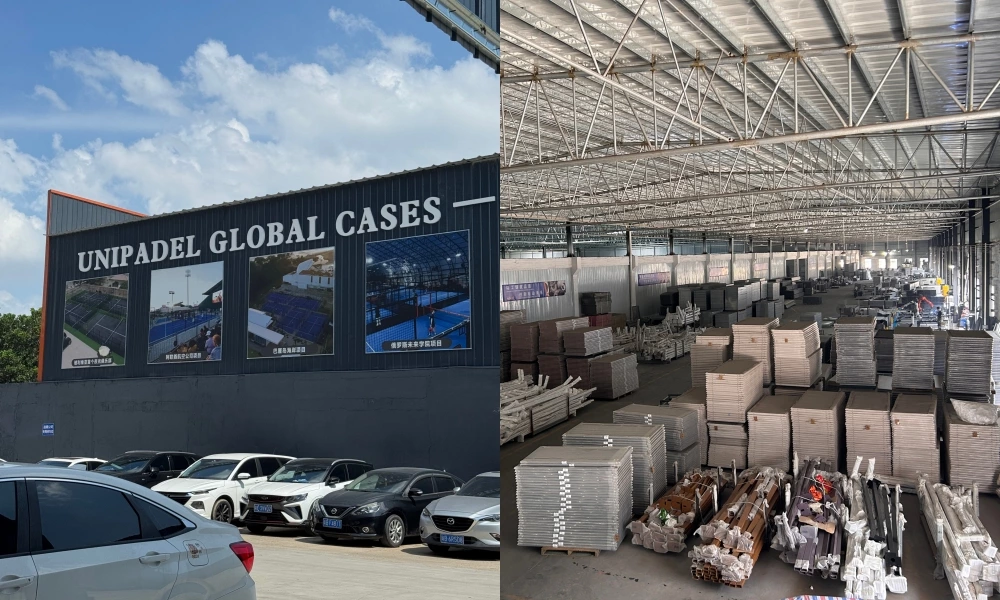
Court procurement directly determines the financial outcome of the project. UNIPADEL Russia padel court provides factory-direct pricing that eliminates distributor markups of 25–40% — saving 3–5 million ₽ on a typical 4-court installation and materially accelerating the payback period.
| UNIPADEL Advantage | ROI Impact |
|---|---|
| Factory-direct pricing | Reduces CAPEX by 20–35% vs. local resellers |
| 12mm HST toughened glass | Eliminates unplanned glass replacement costs |
| Hot-dip galvanized steel (ISO 1461) | 20+ year structural life; near-zero maintenance OPEX |
| Textured monofilament turf | Consistent ball bounce retains advanced players |
| Full CAD layout + technical documentation | Eliminates engineering consultant fees |
| Russian-language assembly manual | Enables local installation crew — no travel costs |
Conclusion
The financial case for padel investment return Russia in regional million-plus cities is among the most compelling sports infrastructure investment opportunities in Eastern Europe in 2026. With 65% average utilisation, 35–45% net margins, and a 24–36 month payback under standard operating conditions, padel clubs are generating cash-on-cash returns that outperform traditional commercial real estate by a wide margin.
The window of opportunity is now. As Moscow approaches saturation, regional Millionniks are waiting for premium operators to establish the market. The first movers who secure prime locations, invest in quality infrastructure, and build genuine community will dominate their regional markets for a decade.