Español
 Franch
  русский
Why Chinese-Made Padel Courts Are Entering the French Market: Quality, Certification & Price
The Question French Buyers Are Asking in 2026
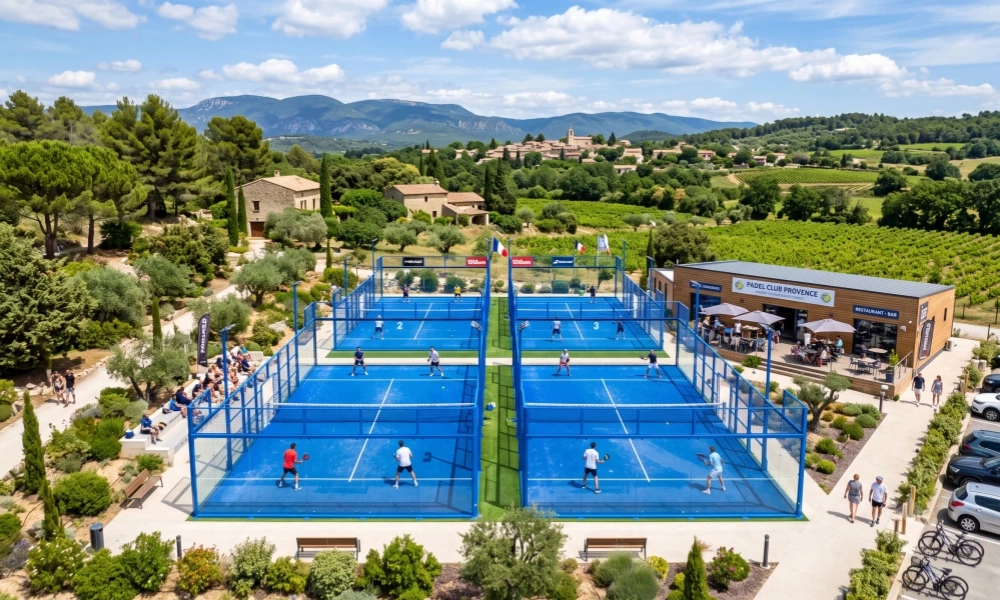
In 2026, the French padel market has crossed 4,100 courts and 1 million active players — and demand for new court infrastructure is accelerating faster than European supply chains can respond. For years, Spanish and other European manufacturers dominated procurement. Today, a new wave of alternatives has emerged, and French project developers, municipal authorities, and tennis club owners are looking eastward and asking a pointed question:
Can a Chinese padel court manufacturer France match European standards — or does choosing a Chinese supplier mean compromising on durability and safety?
Why China Manufacturers Are Entering France Now
The entry of Chinese padel court suppliers into France is driven by a fundamental supply-demand imbalance and a widening manufacturing cost gap.
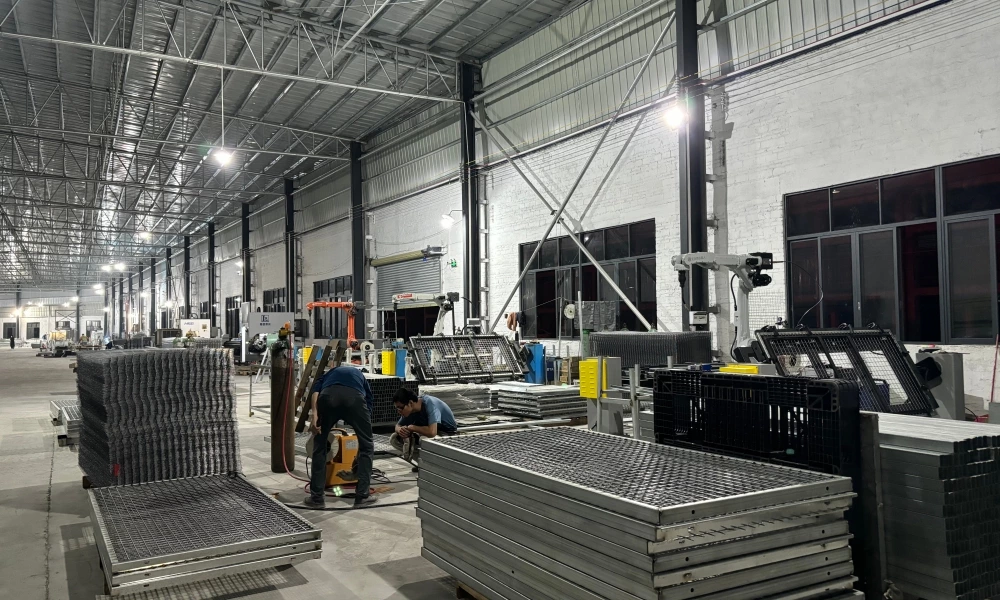
European manufacturers — concentrated in Spain — face strained production capacity, extended lead times of 3–6 months, and rising material and energy costs that have pushed prices to record levels. Meanwhile, Chinese industrial hubs have leveraged advanced steel fabrication infrastructure, robotic welding technologies, CNC laser cutting, and vertical raw material integration to produce high-precision padel courts at a fraction of the cost.
The economic driver is clear when examining the padel court China France price comparison at Ex-Works (EXW) level:
Price Comparison: Chinese vs. European EXW (2026)
| Court Model | Chinese Manufacturer EXW | European / Spanish EXW | Price Premium |
|---|---|---|---|
| Standard Panoramic Court | €6,500 – €7,500 | €16,000 – €22,000 | +146% to +193% |
| Premium Super Panoramic | €7,500 – €9,000 | €20,000 – €28,000 | +166% to +211% |
| Average Lead Time | 4–6 weeks | 12–24 weeks | +8 to +18 weeks |
This EXW gap is so substantial that even after adding shipping, customs, and domestic logistics, French club owners can save tens of thousands of euros — capital that can be reinvested in HVAC systems, changing facilities, and marketing that drive membership acquisition.
The Real Quality Concerns French Buyers Raise
Padel court China France quality scrutiny by French buyers — particularly engineering firms, municipal architects, and private investors — focuses on five specific technical parameters. Each concern is legitimate. Each has a technical benchmark that separates acceptable suppliers from unacceptable ones.
Concern 1: Corrosion in Atlantic and Mediterranean Coastal Climates
France has thousands of kilometres of coastline (Normandy, Brittany, French Riviera, Corsica) characterised by high salinity, coastal winds, and year-round humidity. Standard steel structures without adequate treatment will rust within months.
- The risk: Cheap suppliers use electro-galvanized or cold-spray zinc primer — a cosmetic treatment that provides no meaningful structural protection at welds or drilled holes.
- The benchmark: Padel court hot dip galvanizing France per ISO 1461 — full immersion in molten zinc at 450°C, creating a metallurgical bond with minimum 75–85 µm zinc coating thickness. This provides 15–20 years of corrosion protection even in marine environments.
Concern 2: Spontaneous Glass Shattering
Padel court glass panels are subject to constant player and ball impact. Standard tempered glass contains microscopic Nickel Sulfide (NiS) inclusions that expand under thermal cycling, causing spontaneous shattering — without any external impact, without warning.
- The risk: Non-HST 10mm glass failing during a tournament, creating both a safety liability and an insurance dispute.
- The benchmark: Padel court glass HST EN 14179 France — Heat Soak Test per EN 14179 subjects tempered glass to 290°C in a controlled chamber, forcing NiS-compromised panels to break in the factory rather than on the court. Only 12mm HST glass should be specified for commercial venues.
Concern 3: Structural Failure Under Wind Load
French outdoor courts must withstand severe seasonal storms across four distinct wind zones, with coastal Zone 3 and Zone 4 regions (Normandy, Corsica) experiencing gusts of 145–165 km/h.
- The risk: Thin-wall steel (2.0mm) frames that buckle or collapse under lateral wind load, shattering adjacent glass panels and requiring costly emergency closure.
- The benchmark: Structural calculations per padel court France wind zone Eurocode (EN 1991-1-4 National Annex), with minimum 3.0mm column wall thickness and hot-dip galvanized baseplates anchored into porous concrete (béton poreux) or draining asphalt (enrobé drainant) sub-base — the FFT's mandatory outdoor sub-base specification.
Certification Requirements for the French Market
Padel court CE certification France is a legal prerequisite — not a marketing differentiator. An insurer will void coverage for any commercial padel club operating with non-certified equipment. French safety inspectors can order immediate closure.
Mandatory Certification Checklist
EN 1090-1 & EN 1090-2 — Execution of Steel Structures (CE Marking) The most critical and most frequently overlooked requirement. Padel court EN 1090 certification France mandates that the manufacturer's Factory Production Control (FPC) system is audited by an EU Notified Body, and that welding processes, steel grades, and load-bearing capacities conform to Execution Class EXC1 or EXC2. Without this, the CE marking on the structural steel is invalid — making the installation non-compliant.
EN 12150-1 + EN 14179 — Glass Certification All glass panels must be certified under EN 12150-1 (thermally toughened safety glass) and carry HST documentation under EN 14179. Each panel must be laser-etched with CE marking and laboratory batch reference numbers traceable to the original heat-soak test records.
Eurocode 1 (EN 1991-1-4) — Wind Zone Compliance The padel court France wind zone Eurocode structural calculation report must be prepared by a registered EU structural engineer and adapt to France's four wind zones. Coastal projects in Brittany, Normandy, and Corsica require Zone 3 and Zone 4 calculations. This document is required for Déclaration Préalable and Permis de Construire submissions.
French Customs and Import Process
Understanding padel court France import customs HS code classification is where many buyers encounter hidden costs — or catastrophic duty exposure.
The Correct HS Code
The entire padel court kit (steel frame, glass, turf, LED lighting, hardware) must be imported as a unified sports equipment assembly under HS Code 9506.99.00 (Articles and equipment for general physical exercise, gymnastics, athletics, other sports or outdoor games).
Standard EU import duty: 2.7% — applied to the CIF value at the French port of entry.
French VAT
French import VAT is 20%, applied to CIF value plus customs duty. For registered commercial clubs (Sociétés), VAT is fully recoverable. Under the EU's Autoliquidation de la TVA à l'importation system, eligible French companies can declare and offset import VAT directly on monthly returns without a cash advance at port — preserving project liquidity.
Container Logistics
A standard 40ft High Cube (40HQ) container accommodates 4 complete padel courts. Sea freight from primary Chinese ports (Shanghai, Ningbo, Shenzhen) to French ports (Le Havre, Fos-sur-Mer) ranges from €2,800–€5,400 per 40HQ container — approximately €700–€1,350 per court.
Total Landed Cost Comparison
The padel court France landed cost is where the full financial case for factory-direct Chinese sourcing becomes undeniable — when the right manufacturer is selected.
Landed Cost: 1 Premium Panoramic Court Delivered to Central France (2026)
| Cost Component | Chinese Court (Top-Tier) | Spanish/European Court |
|---|---|---|
| EXW factory price | €8,000 | €21,000 |
| Ocean freight & port handling | €1,200 | €0 |
| Road freight (port to site) | €1,800 | €2,200 |
| Import duty (2.7% HS 9506) | €216 | €0 |
| Customs clearance & port fees | €450 | €0 |
| Local unloading & crane | €900 | €900 |
| Supervised installation | €2,786 | €700 |
| Total landed & installed cost | €15,152 | €24,800 |
| Net saving per court | €9,648 (39% reduction) | — |
For a 5-court club, this represents a €48,240 total CAPEX saving — sufficient to fund a full social lounge fitout, a pro shop, or 6 months of operating reserve.
The 9 Questions French Buyers Must Ask Any Chinese Supplier
Before signing any contract or wiring a deposit, put these 9 questions to any Chinese manufacturer — in writing, demanding documented responses:
- Do you hold EN 1090-1 Factory Production Control (FPC) certification from an EU Notified Body?
- Is the steel hot-dip galvanized per ISO 1461 with a guaranteed minimum zinc coating of ≥75µm?
- Is all glass EN 12150-1 certified and Heat Soak Tested per EN 14179? Can you provide factory test reports with batch reference numbers?
- Do you provide a Eurocode 1 structural calculation report adapted to French wind zones?
- What is the turf fibre brand, dtex specification, and UV resistance rating?
- Are the gaskets EPDM rubber (not PVC)? What is the continuous gasket specification?
- Under which HS Code will the shipment be invoiced and exported? Confirm HS 9506.99.00 only.
- Is welding performed by robotic systems with CNC laser-cut components?
- Do you have local installation partners or supervised installation service in France?
How UNIPADEL Meets French Market Requirements
UNIPADEL France padel court projects are engineered to the full French regulatory standard — not adapted to it after the fact. Here is how UNIPADEL addresses every concern raised in this analysis:
| Requirement | UNIPADEL Specification |
|---|---|
| Steel corrosion | Hot-dip galvanizing ISO 1461, ≥75–85µm zinc coating, confirmed by batch test report |
| Glass safety | 12mm HST toughened glass, EN 12150-1 + EN 14179 certified, batch-traceable |
| Structural integrity | S355JR steel, 3.0–4.0mm wall thickness, robotic-welded, CNC laser-cut |
| Wind zone compliance | Eurocode 1 structural calculations per French wind zones 1–4, PE-adaptable |
| Glass mounting | Continuous EPDM rubber gaskets, full perimeter, 5mm neoprene separation |
| Weld quality | EN ISO 3834-2 welding quality certification, EXC2 execution class |
| CE marking | EN 1090-1 compliant — FPC audited by EU Notified Body |
| Installation | French-language assembly manual; remote video supervision; on-site supervisor (4+ courts) |
The Right Chinese Manufacturer Is Not a Compromise
The French padel boom demands capital efficiency. Sourcing padel courts from China provides the most financially viable path to scaling a club in 2026 — but only when the Chinese manufacturer meets the full technical standard the French market legally requires.
The padel court manufacturer France that matters is not China vs. Europe. It is certified vs. uncertified, documented vs. undocumented, engineered vs. assembled. The Nantes case cost an investor €16,000 in repairs on top of their "savings." The Lyon case saved €50,000 with zero compromise on safety or performance.
Working with UNIPADEL delivers 39% total landed cost reduction compared to European alternatives — with full CE certification, EN 1090-1 compliance, EN 14179 HST glass, ISO 1461 hot-dip galvanizing, and Eurocode-compliant structural documentation ready for French planning authority submission.
In 2026, the right Chinese manufacturer is not a compromise. It is a strategic competitive advantage.
Planification d'un projet de court de padel en France? Contact UNIPADEL for factory-direct pricing, CE certification documentation, Eurocode wind zone calculations, and French customs HS code compliance support.