Español
 Franch
  русский
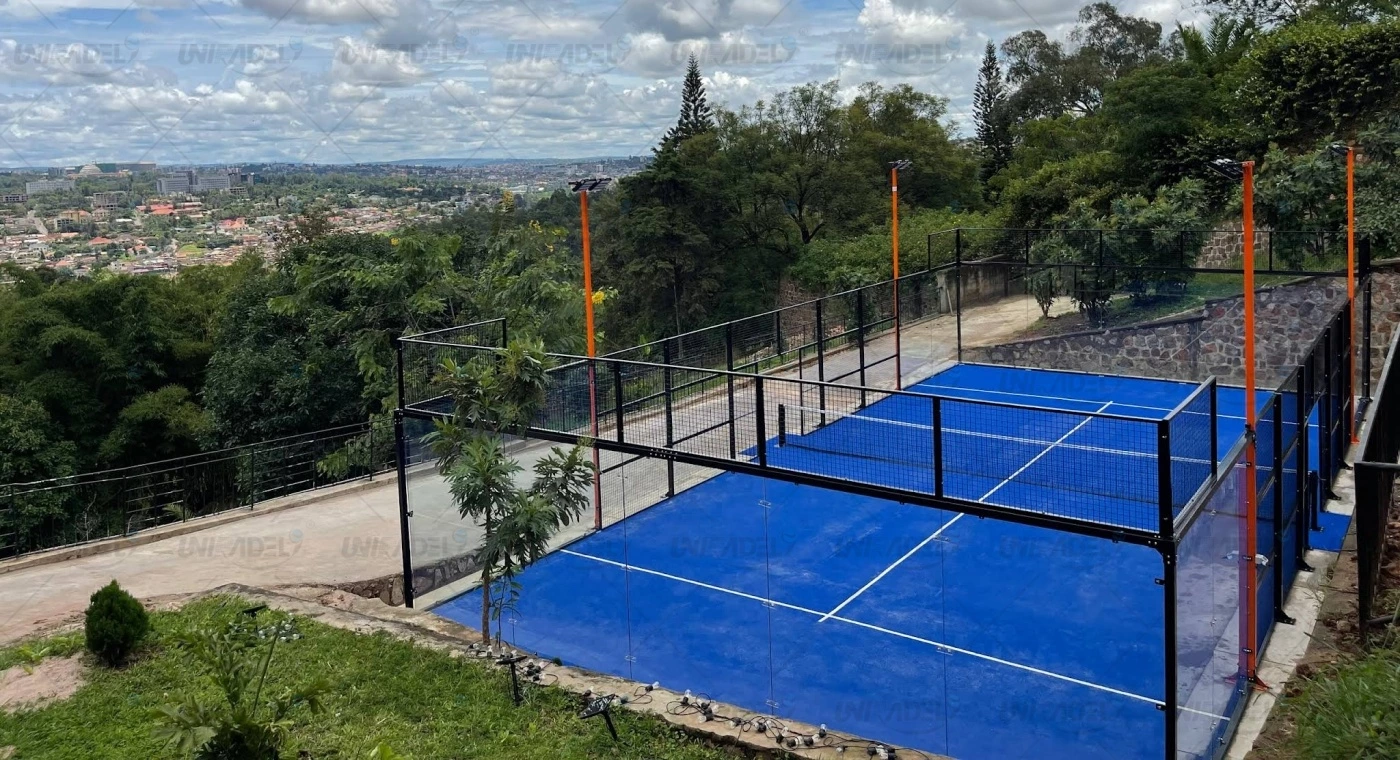
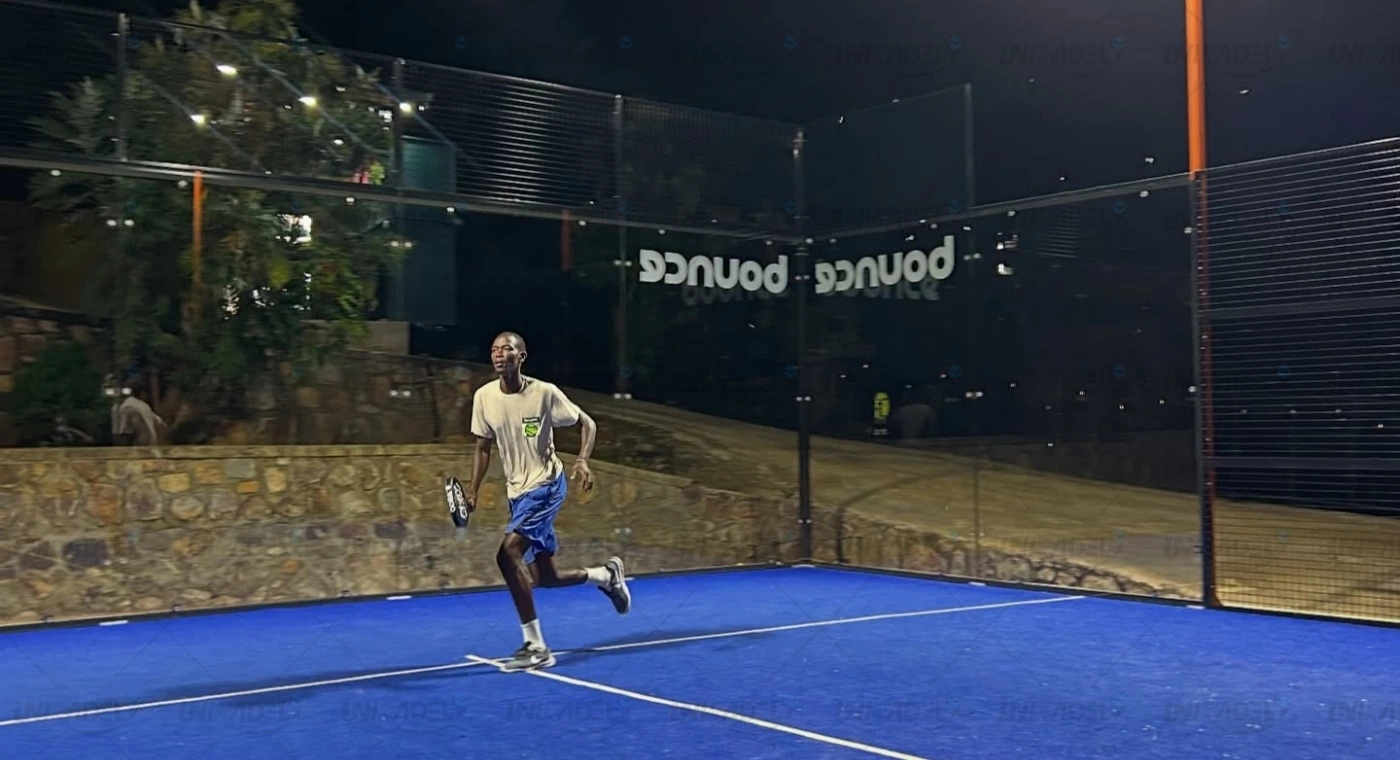
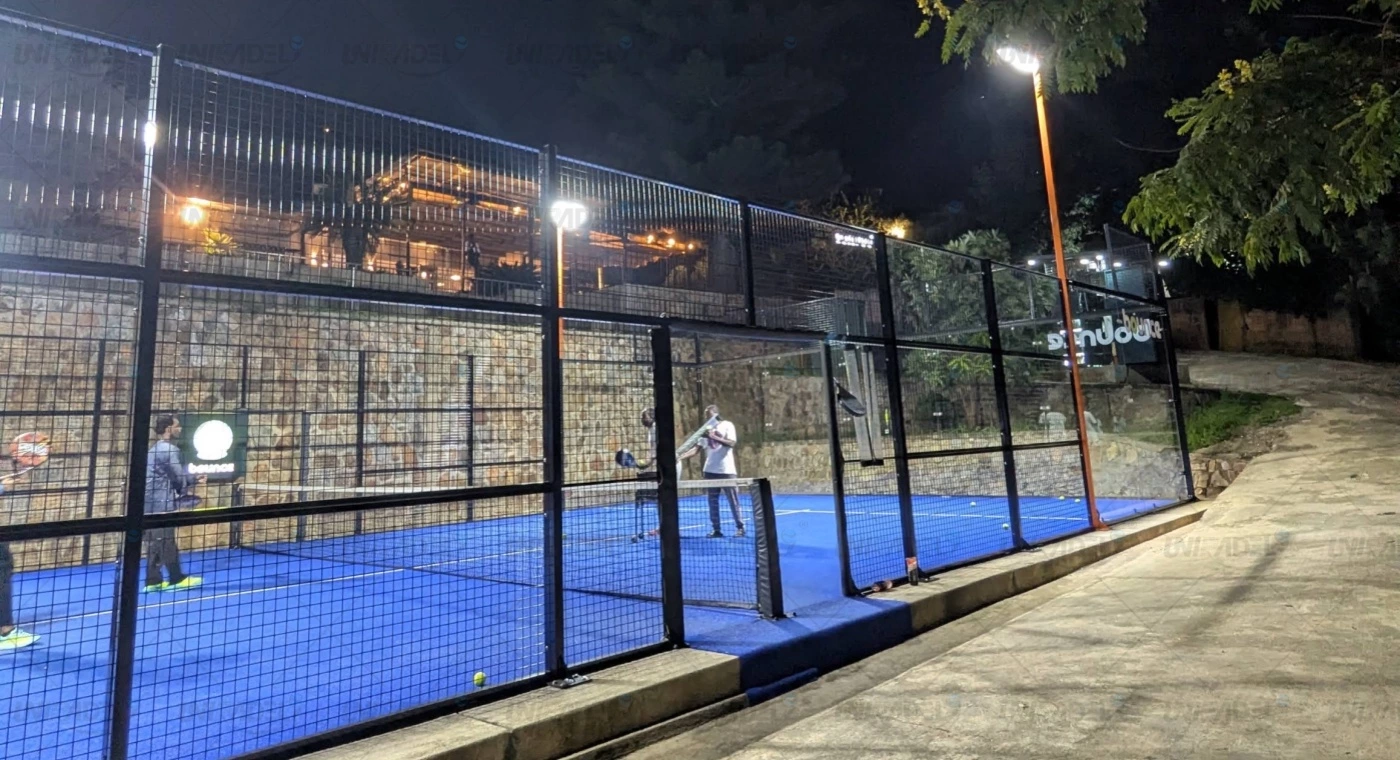
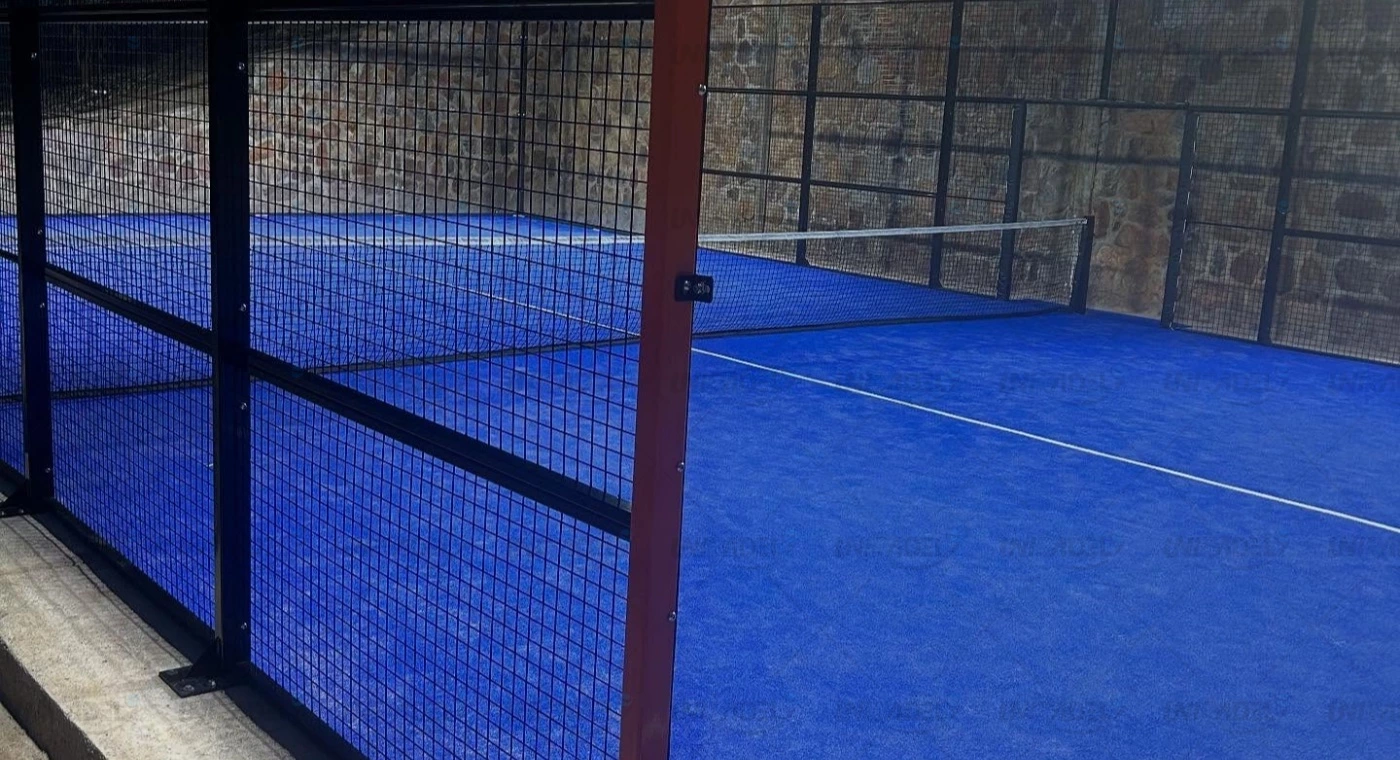
Padel club in Kigali, Rwanda
Location: 16 KN 47 St, Kigali, Rwanda Client: Bounce Rwanda Court Type: 1 × Panoramic Padel Court | Black Frame | Orange Straight Light Arms
A Padel Court on Top of Kigali
Bounce Rwanda didn't set out to build just any sports facility. Perched on one of Kigali's hillside terraces overlooking the city, the team had a clear vision — a padel court that felt premium from every angle. Not just functional. Actually impressive.
The challenge? Rwanda is landlocked, padel is still growing across padel court Africa markets, and sourcing a professional-grade court from a padel court manufacturer in China to Kigali isn't a standard logistics route. When they reached out to UNIPADEL, those were exactly the kind of challenges we sat down to work through together.
What Bounce Rwanda Chose — and Why
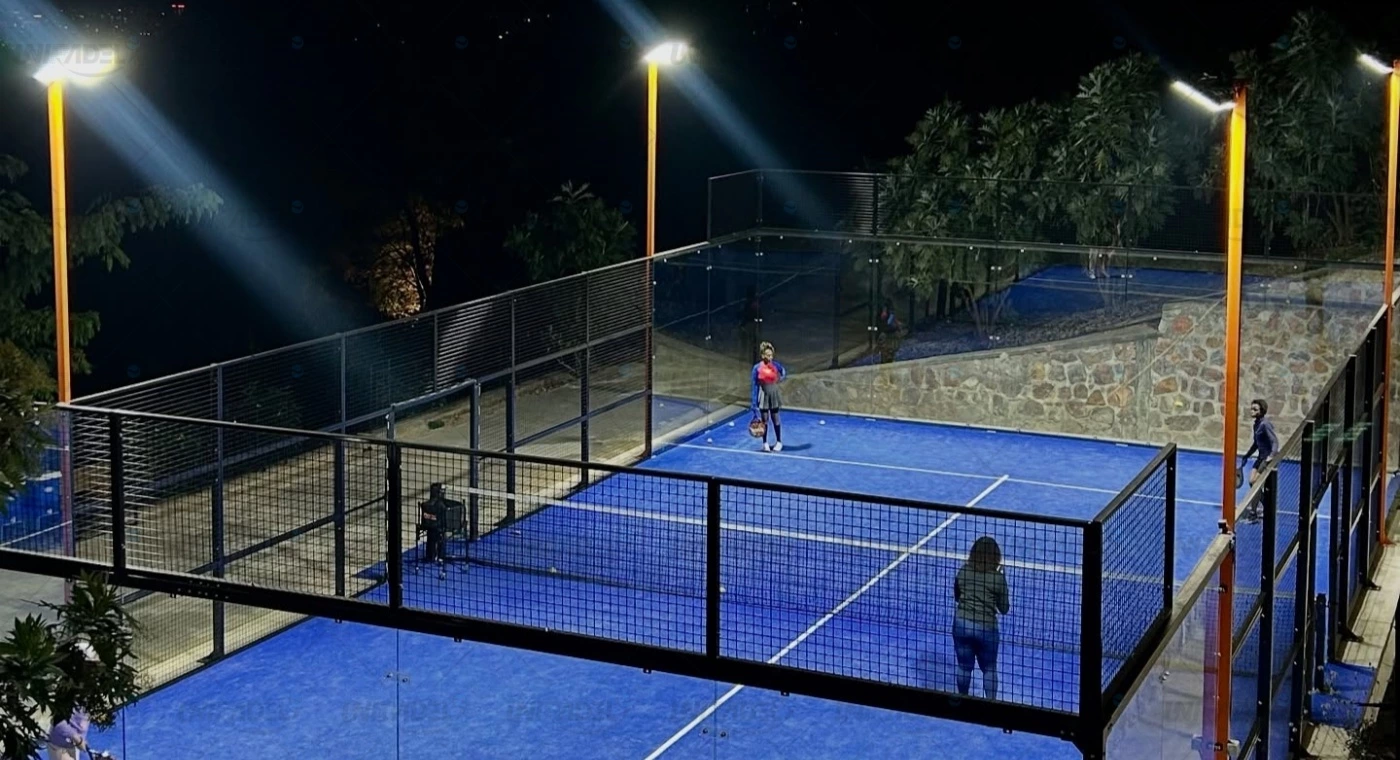
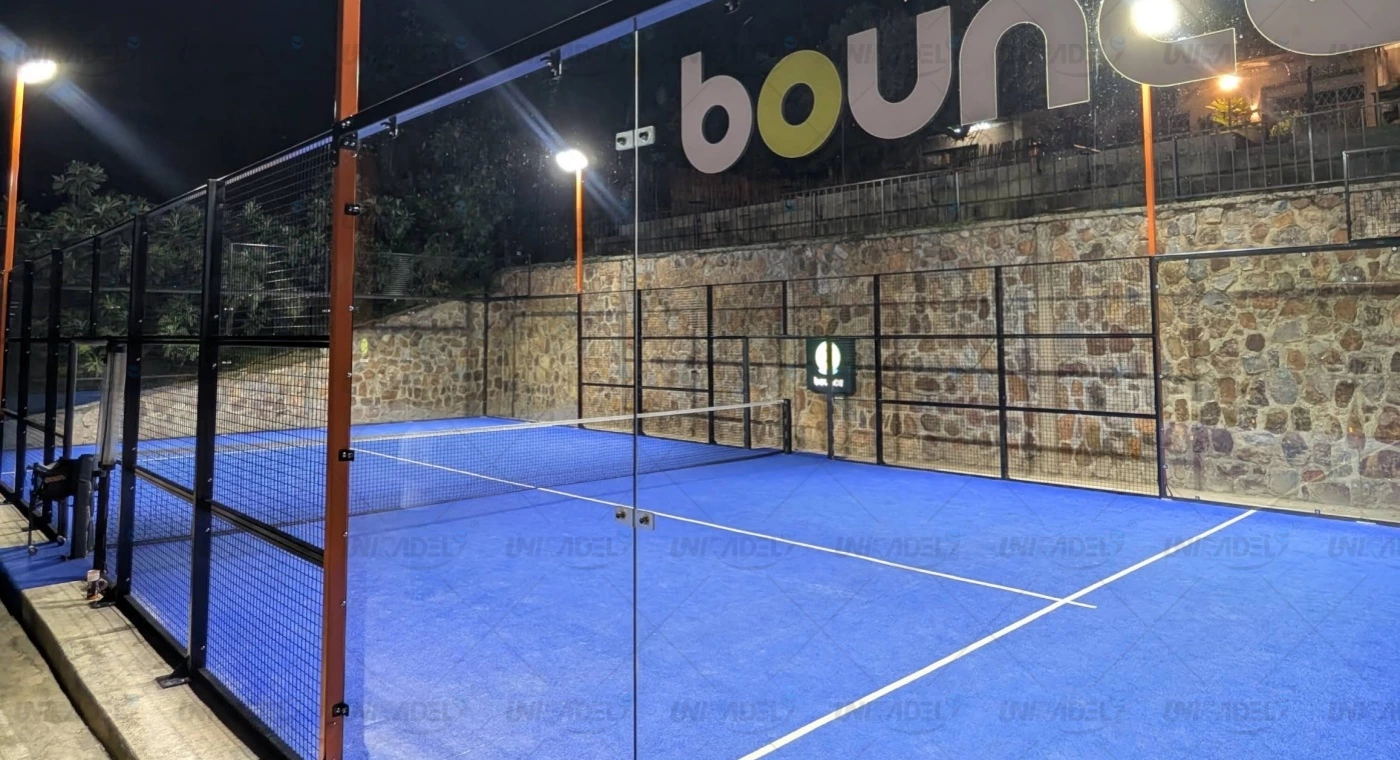
The court configuration Bounce selected was our Panoramic Padel Court — black powder-coated steel frame with straight orange light arms. It's a combination that reads bold and clean at the same time. The black frame blends into the night scene without fading into the background, while the orange arms give the court a distinctive silhouette you can't miss whether you're on court or watching from the terrace above.
The panoramic glass walls weren't just an aesthetic choice either. Because the court sits on a tiered terrace with a stone retaining wall on one side and open green hillside on the other, maximizing sightlines mattered. Players get that open, arena-like feel. Spectators can follow the game from any angle. And from further away, that blue artificial turf visible through the glass walls practically invites people over to ask what sport that is.
The blue court surface paired with white line markings and the Bounce branding panels on the back glass created exactly the kind of instagrammable setup the club needed to build local buzz quickly.
Custom Padel Court Export: Sea Freight to a Landlocked Country
Shipping a custom padel court export to Rwanda requires a bit more planning than most destinations.
Rwanda is landlocked. Cargo travels by sea to the nearest suitable port, then continues overland into Kigali — a route that's well-established for East African imports but requires careful coordination: accurate packing lists, correct HS codes for steel structures and sports equipment, and documentation that won't stall at customs.
We handled the export documentation from our end in China — packing list, commercial invoice, bill of lading, and component labeling so the receiving team could identify every part without confusion. Steel frame sections, glass panels in timber crates, turf rolls, net, and lighting hardware were all consolidated into a single container. Efficient on freight cost. Organized enough that assembly on site ran smoothly.
The Bounce team had clear timelines from day one — no chasing updates, no last-minute surprises.
Sea Freight to a Landlocked Country: How We Got It There
This part is worth talking about honestly, because shipping to Rwanda is genuinely not the easiest route in the world.
Rwanda is landlocked. The most common sea freight path goes through Dar es Salaam port in Tanzania, with inland trucking from there to Kigali. It's a well-established route for East African imports, but it requires proper coordination — accurate packing lists, correct HS codes for steel structures and sports equipment, and a freight forwarder who knows the Dar–Kigali road corridor.
We handled the export documentation from our end in China: packing list, commercial invoice, bill of lading, and the structural component labeling so customs clearance at destination wouldn't get held up over paperwork gaps. The court components — steel frame sections, glass panels packed in custom timber crates, turf rolls, net, and lighting hardware — were consolidated into a single 40ft container. Compact enough to keep freight cost manageable. Organized well enough that the installation team on-site could identify each component without guessing.
Total lead time from order confirmation to container departure was within our standard production schedule. The Bounce team had realistic timelines from day one, which made the whole process smoother for their side too — no chasing updates, no surprise delays showing up at the last minute.
Planning a Padel Court in Africa or a Similar Market?
This UNIPADEL case study is one of several projects we've completed across markets where the logistics are more complex and the sites don't follow a standard playbook. Padel is growing fast across Africa, and the operators driving that growth are serious about quality — they want a padel court manufacturer in China that can actually deliver to their location and support the project end to end.
If you're planning a court with unusual site constraints, a non-standard shipping route, or specific customization requirements — reach out to UNIPADEL. Tell us what you're building and where. We'll take it from there.
Reach out to UNIPADEL. Tell us what you're building and where. We'll take it from there.