Español
 Franch
  русский
Padel Club in Chiang Mai, Thailand
Chiang Mai: The Next Padel Hotspot
Bangkok's padel scene has been growing steadily for a few years now, and the momentum is clearly moving north. Chiang Mai — Thailand's cultural capital and a hub for expats, digital nomads, and active lifestyle communities — has long had the appetite for high-quality outdoor sports facilities. What it was missing was a proper padel destination.
AMA Padel is filling that gap. Located at 251, 3, Chang Phueak, Amphoe Mueang Chiang Mai, Chiang Mai 50300, Thailand, this project represents one of the more ambitious padel club builds in northern Thailand. UNIPADEL was brought on to supply and support the full facility: 3 Panoramic Padel Courts and 1 Padbol Court, with our involvement spanning everything from initial layout consultation and factory production through to export logistics and on-site installation guidance.
This case study walks through what that actually looked like — not just the finished product, but the process that got it there.
Project Specifications
| Detail | Information |
|---|---|
| Project Name | AMA | Padel, Chiang Mai |
| Address | 251, 3, Chang Phueak, Mueang Chiang Mai, Chiang Mai 50300 |
| Courts Supplied | 3 × Panoramic Padel Court + 1 × Padbol Court |
| Venue Type | Semi-indoor (steel roof canopy) + Outdoor |
| Scope of Service | Layout planning / Manufacturing / Export logistics / Installation support |
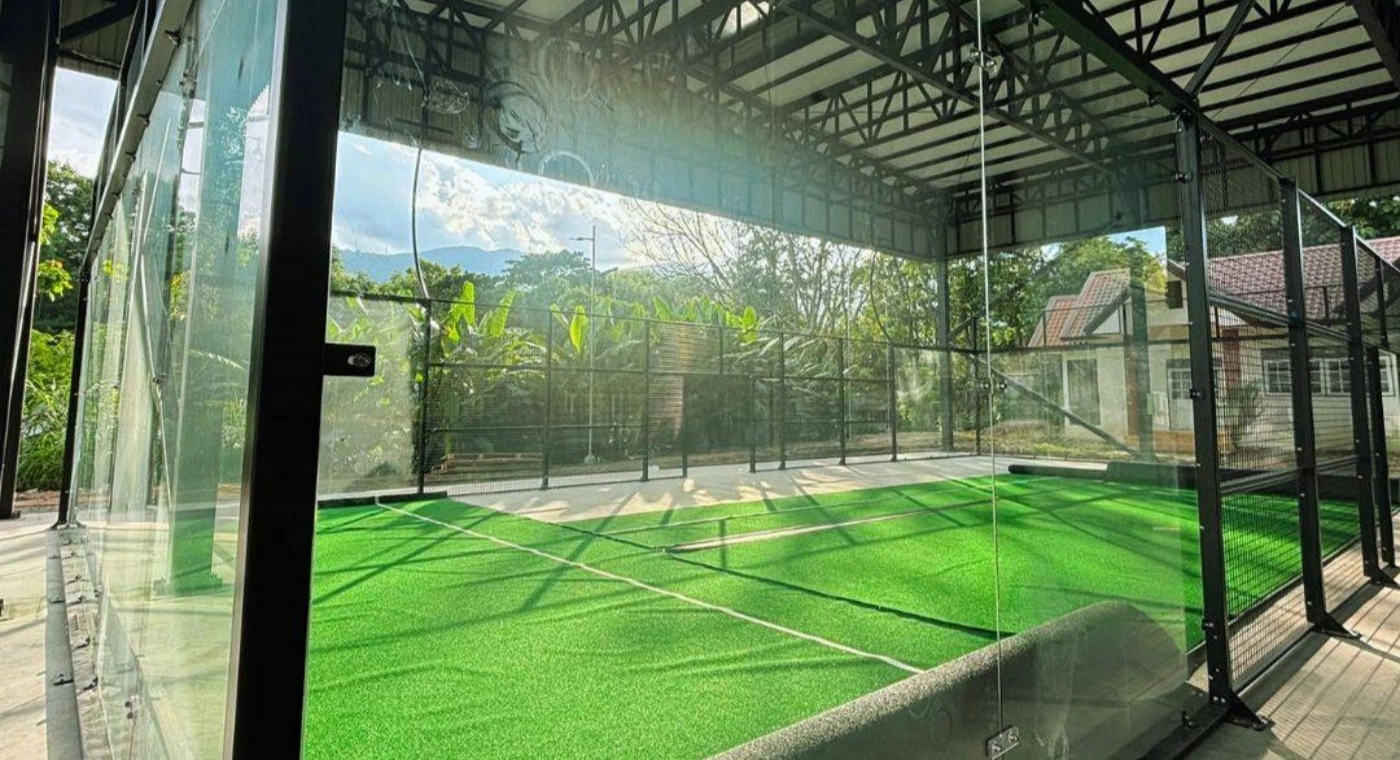
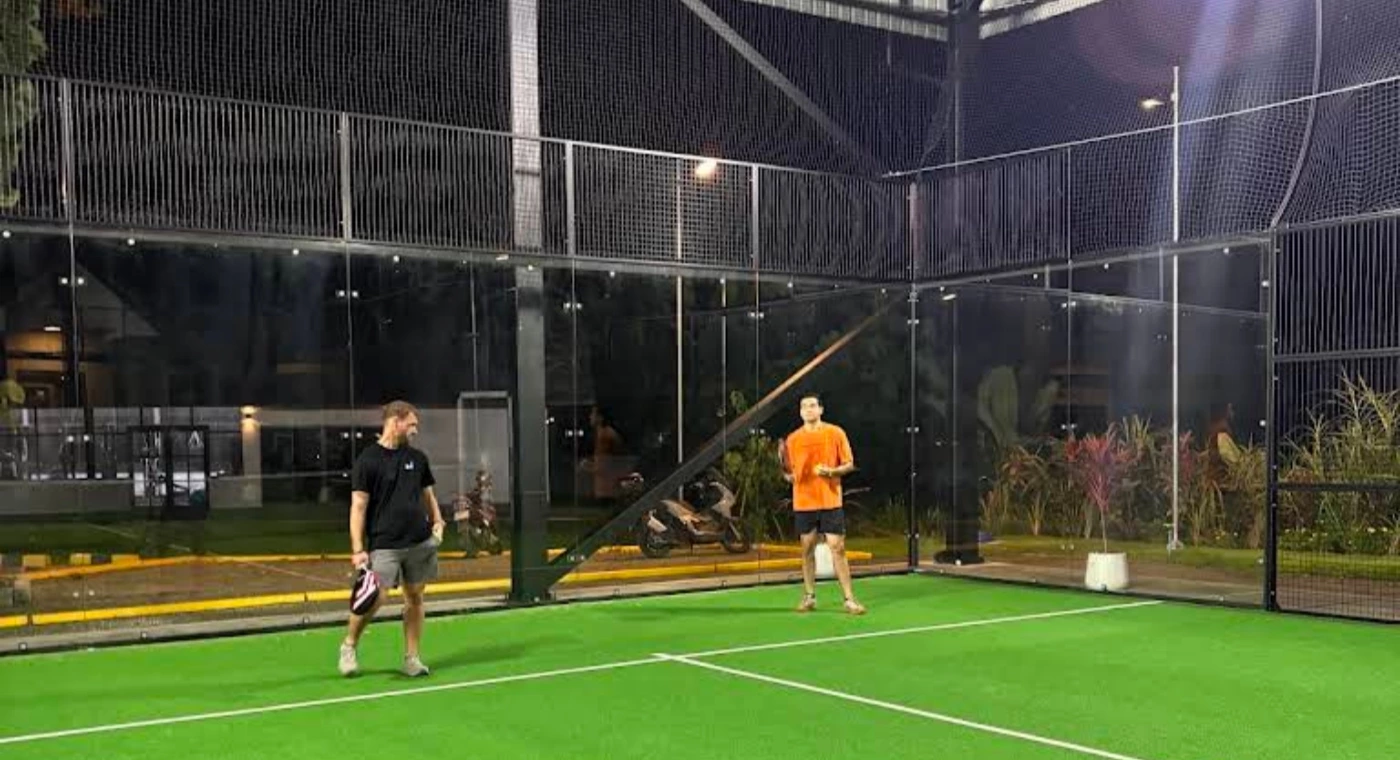
Looking at the completed facility, a few design decisions stand out. Several courts are positioned under a wide-span steel-frame canopy roof — a smart call for Chiang Mai, where the rainy season can disrupt outdoor operations for months at a time. The covered configuration means the club can keep booking courts regardless of weather, protecting both revenue and member experience.
The outdoor courts, meanwhile, retain the natural light and the surrounding greenery that gives Chiang Mai venues their character. Green artificial turf paired with matte black steel frames keeps the aesthetic clean and grounded, without trying too hard. It's a combination that photographs well and holds up in person.
Getting the Courts There: Logistics Is Not an Afterthought
When buyers evaluate padel court suppliers, the conversation usually starts with product specs — steel thickness, glass grade, turf performance. Those things matter. But for international projects, the part that most often causes real problems isn't the product itself. It's the logistics chain between the factory floor and the job site.
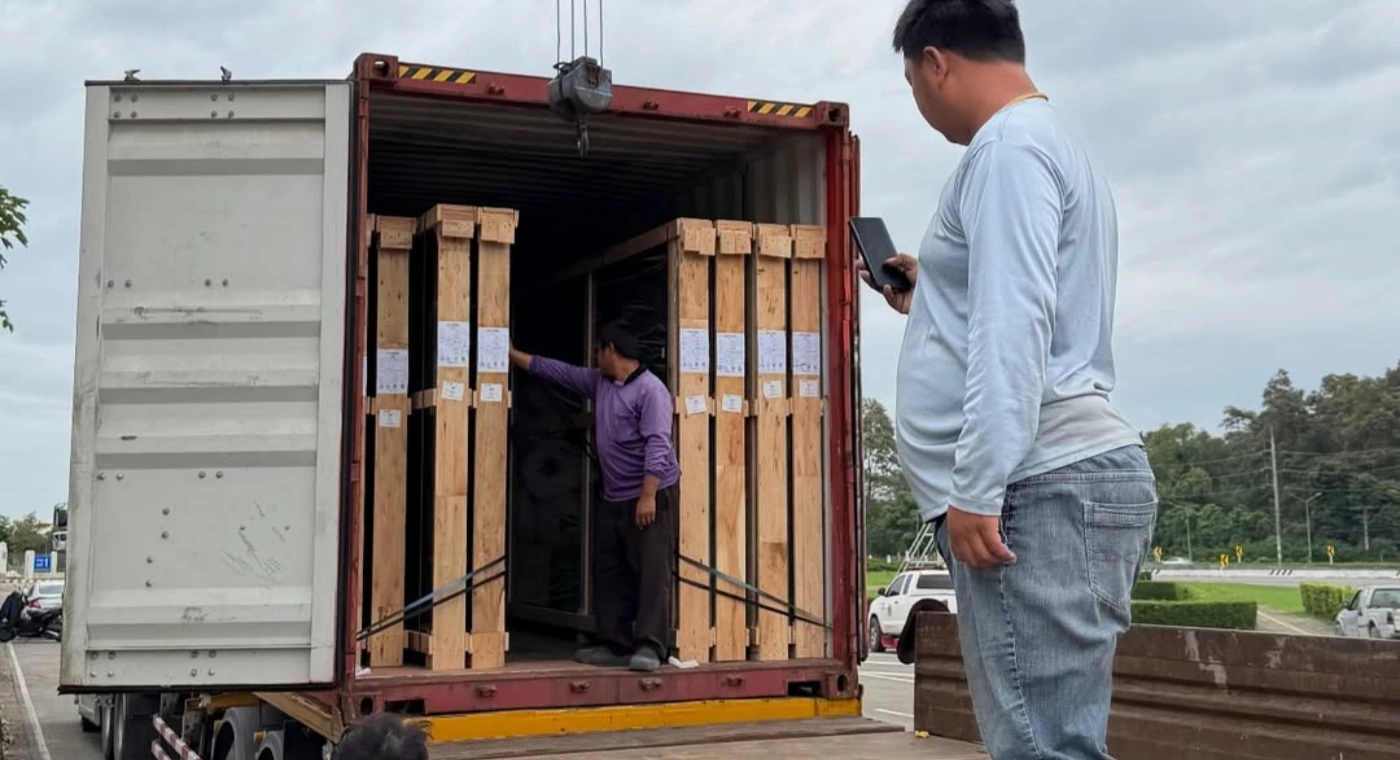
For the Chiang Mai project, the entire delivery process was documented on-site by the local project team. After production was completed at the UNIPADEL factory in China, all components were packaged for international shipping and loaded into containers bound for Thailand. Once the goods cleared customs and arrived in Chiang Mai, the local installation crew worked alongside UNIPADEL's technical guidance to unload, inventory, and begin assembly.
A few specific practices shaped how this delivery went smoothly:
Component-level packing with numbered manifests. Steel frames, tempered glass panels, mesh sections, base plates, gate assemblies — each category was packed separately and labeled to correspond with the installation drawings. This sounds basic, but it's the difference between a job site that runs efficiently and one where half the day is spent looking for a missing part.
Timber crating for glass protection. Tempered glass panels were secured in custom timber frames to absorb vibration over long-haul transport. Given the distances involved in shipping from China to northern Thailand, this level of packaging is a necessity rather than a precaution.
Pre-shipment site coordination. Before goods left the factory, UNIPADEL confirmed the on-site conditions with the project team: slab dimensions, access routes for unloading, and the planned construction sequence. Arriving with that information already aligned meant the installation could begin almost immediately after delivery.
None of this is remarkable on paper. But in practice, it's what separates a project that lands on schedule from one that drags on while the client waits for replacement parts or resolves customs issues.
The Build: What the Site Photos Actually Show
The installation documentation for AMA Padel is unusually thorough — there are photos covering every major stage of the build, and they tell a clearer story than most case studies.
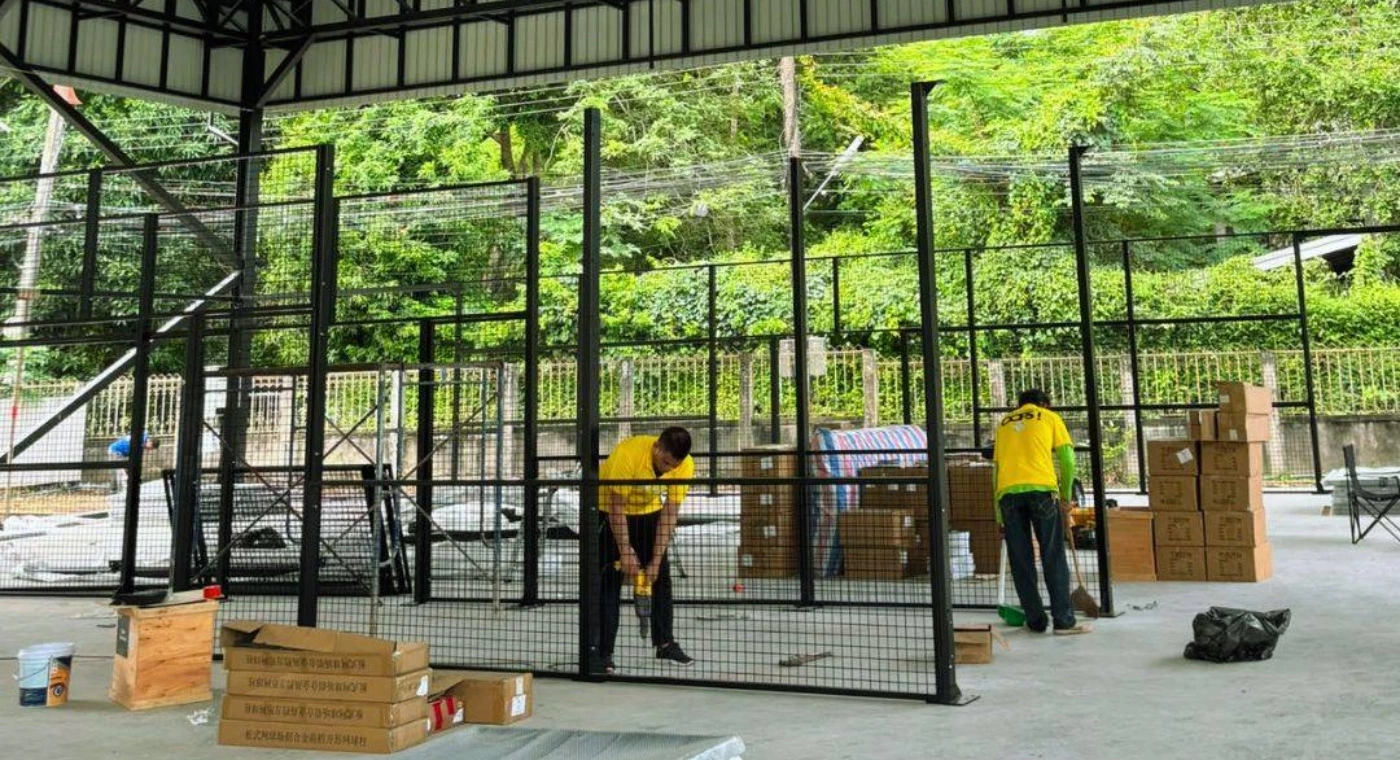
Steel frame erection. Early-stage photos show multiple workers operating in parallel across different sections of the court structure. Rather than completing one element at a time and moving on, the team worked simultaneously on several anchor points and vertical columns. This kind of parallel workflow is what keeps a multi-court project on a reasonable timeline. It requires clear coordination and a well-organized materials setup, both of which were visible on site.
Semi-indoor court integration. The courts installed beneath the steel canopy required a different approach to frame placement and alignment compared to a standard outdoor installation. The existing roof structure had its own column grid, and the court layout was adapted accordingly to maximize the usable footprint without compromising structural integrity or player clearance zones. These kinds of on-the-fly adaptations are common in real projects, and handling them without disrupting the schedule requires both technical knowledge and communication between the supplier and the local team.
The Padbol Court. Padbol uses a smaller, fully enclosed court format with different wall configuration compared to standard padel. The completed Padbol Court uses an independent enclosure structure, visually distinct from the adjacent panoramic padel courts. Operationally, this gives the club two different offerings under one roof — padel for the main audience, and Padbol as a differentiated product that appeals to a slightly different group of players or beginners looking for a more accessible entry point.
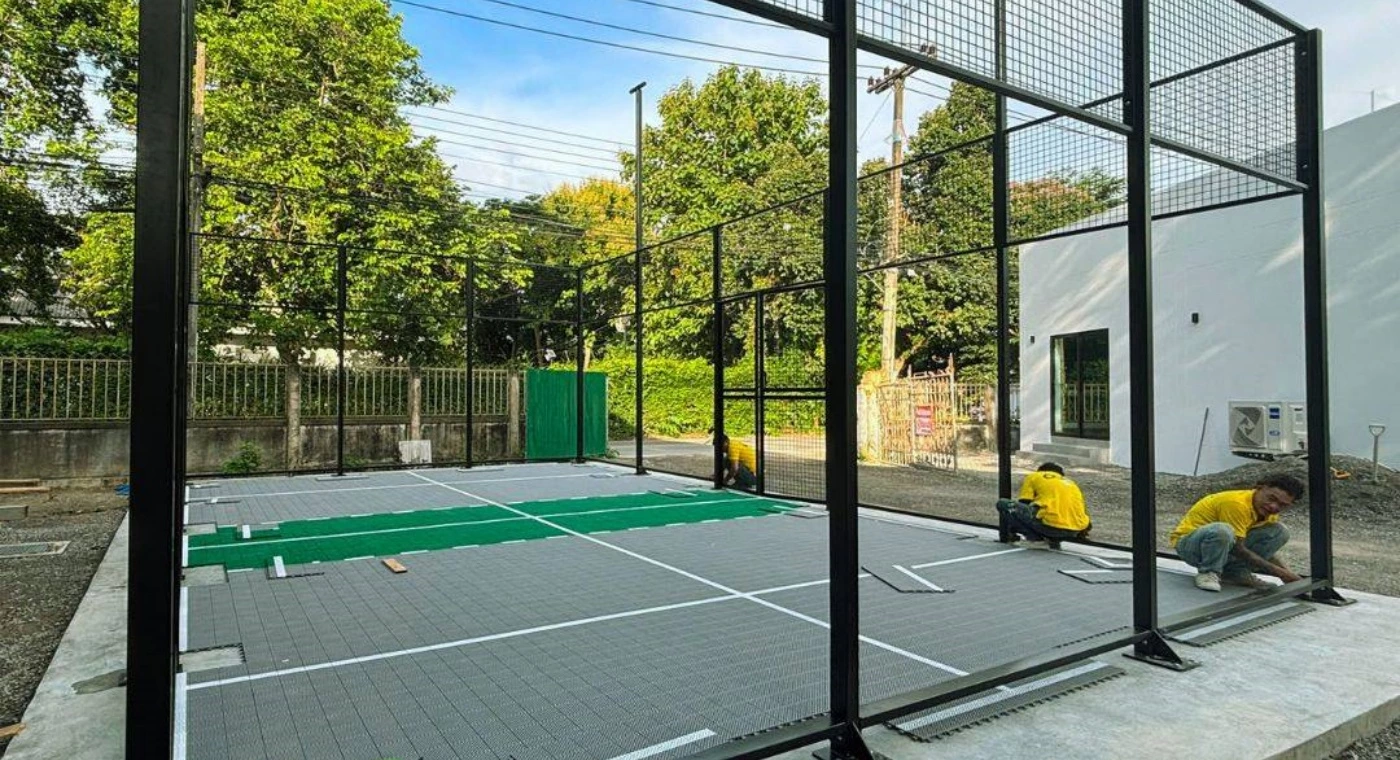
Turf installation. The green artificial turf installation phase required careful seam alignment and edge finishing. The quality of this work directly affects ball bounce consistency during play — uneven seams or poorly finished edges create irregular bounce patterns that serious players notice immediately. From the site photos, the finished surface looks well-executed, with tight seams and clean perimeter treatment.
What UNIPADEL Actually Provides
The AMA Padel project is a good illustration of what the service scope looks like on a real overseas multi-court build. It goes well beyond supplying hardware.
1. Layout and Court Selection Consulting. Before anything was ordered, we worked with the client on the mix of court types. The combination of Panoramic Padel Courts and a Padbol Court reflects a deliberate decision to serve both an established padel audience and bring in new players through a more accessible format. That kind of planning conversation happens before any production begins.
2. Custom Manufacturing. Frame color, turf specification, glass panels, lighting columns — all produced to the project's specific requirements. For AMA Padel, the black frame and green turf palette was chosen to complement the natural surroundings of the venue, which sit in a relatively lush part of the city.
3. Export Logistics Management. This includes documentation for customs, coordination with freight forwarders, and managing the transit timeline to align with the project's construction schedule. For Thailand specifically, having complete and accurate customs documentation prepared in advance is one of the more effective ways to avoid clearance delays.
4. On-Site Installation Support. Detailed installation drawings, component assembly instructions, and direct technical communication with the local crew throughout the build. For teams who haven't installed these courts before, this support is what makes the difference between a structurally sound result and a job that needs remedial work later.
5. Post-Completion Guidance. After handover, UNIPADEL provides maintenance protocols and recommendations for keeping courts performing well over time — turf care, hardware checks, seasonal inspection points.
The Bigger Picture
The AMA Padel Chiang Mai project demonstrates something that's worth saying plainly: the quality of a padel court project is determined as much by how it's delivered as by what's delivered. The product has to be right, but so does the packaging, the documentation, the communication, and the on-site follow-through.
If you're exploring padel court options for a project in Thailand, Southeast Asia, or elsewhere, UNIPADEL can provide a detailed court configuration proposal and a clear picture of the full delivery process from our factory to your site.
Ready to build? Contact UNIPADEL for a customized padel court solution and export delivery consultation.