Español
 Franch
  русский
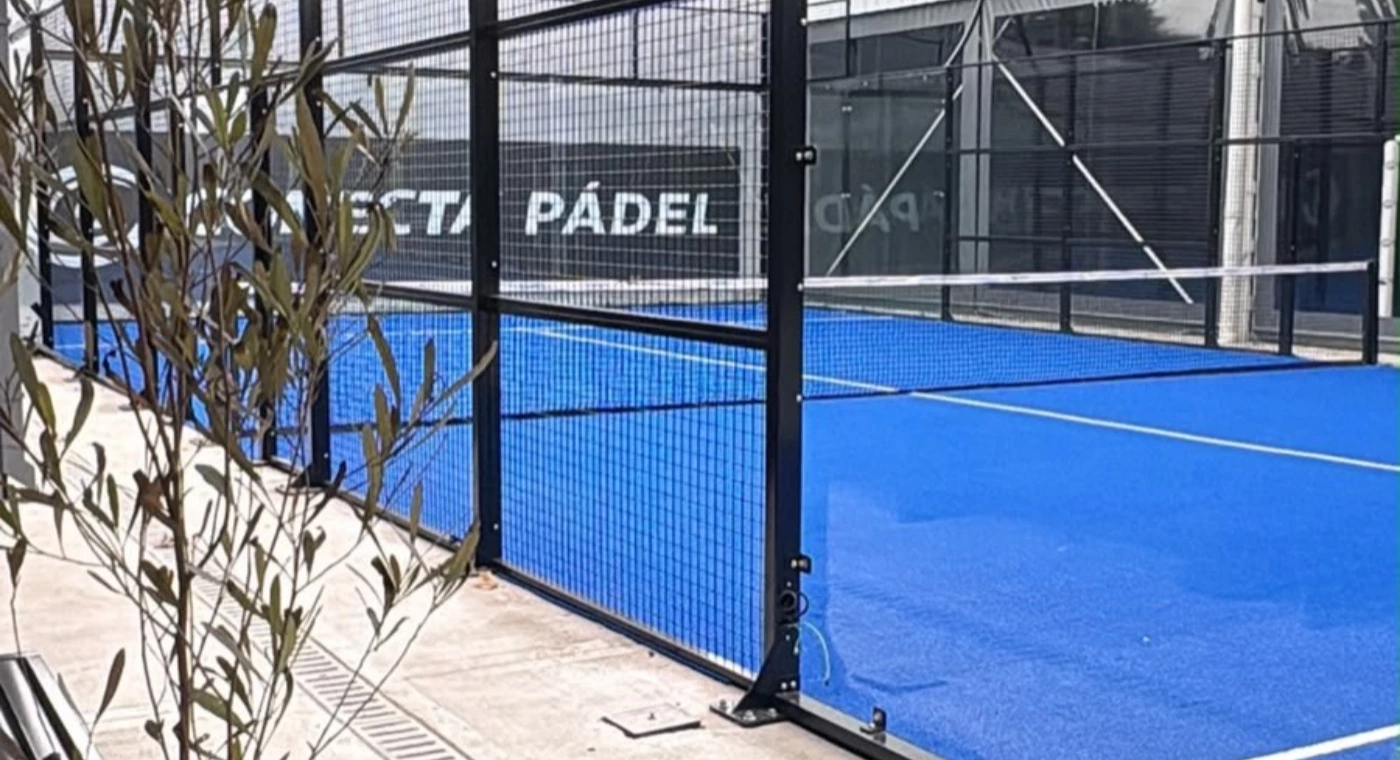
Padel Club in Buenos Aires, Argentina
Argentina: Where Padel Is Already Part of Daily Life
Padel has been deeply embedded in Argentine culture for decades. Unlike many markets where the sport is still in growth mode, Argentina — and Buenos Aires Province in particular — has a mature padel community. Clubs here aren't just sports facilities; they're social hubs where people show up regularly, bring their friends, and stay for a coffee after the match.
That's the environment Conecta Padel is operating in. Located at Zapiola 52, B1876BCB Quilmes, Provincia de Buenos Aires, Argentina, the club sits in Quilmes — a well-established urban district within the greater Buenos Aires metropolitan area, with a dense local population and strong demand for quality sports amenities. For this project, UNIPADEL supplied 5 Panoramic Padel Courts: 4 indoor and 1 outdoor, creating a facility capable of running at full capacity regardless of weather conditions.
Project Specifications
| Detail | Information |
|---|---|
| Project Name | Conecta Padel |
| Address | Zapiola 52, B1876BCB Quilmes, Provincia de Buenos Aires, Argentina |
| Courts Supplied | 5 × Panoramic Padel Court |
| Court Configuration | 4 Indoor + 1 Outdoor |
| Court Colour | Blue artificial turf + Black steel frame |
| Scope of Service | Layout planning / Manufacturing / Export logistics / Installation support |
Location and Space: A Five-Court Club in an Urban Neighbourhood
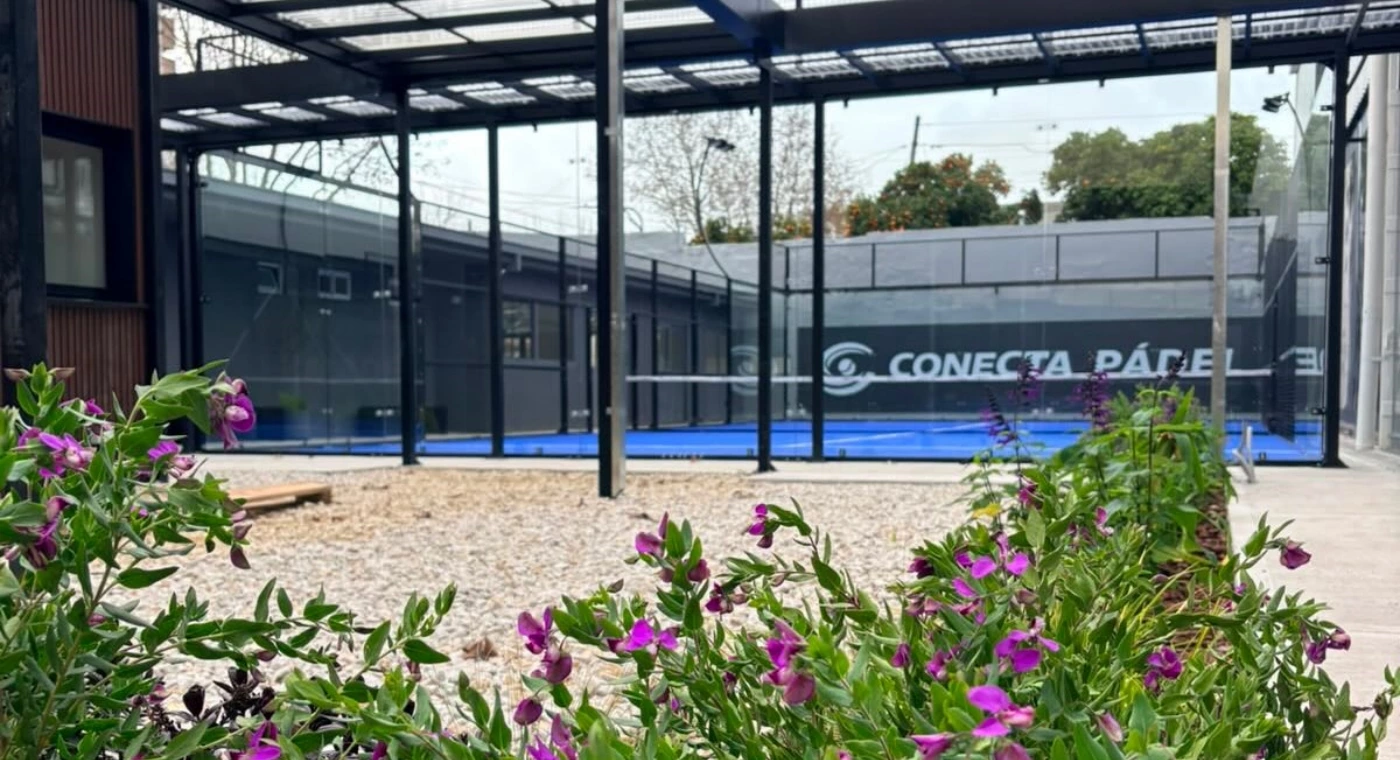
The site photos tell a clear story about how Conecta Padel fits into its surroundings. This is a compact urban build — residential buildings on one side, street-level greenery on the other — the kind of neighbourhood padel club that's become a standard feature of Argentine city life. In one of the outdoor court photos, an orange tree heavy with fruit is visible behind the back wall. It's a small detail, but it captures something real about how padel clubs in South America exist within their communities rather than apart from them.
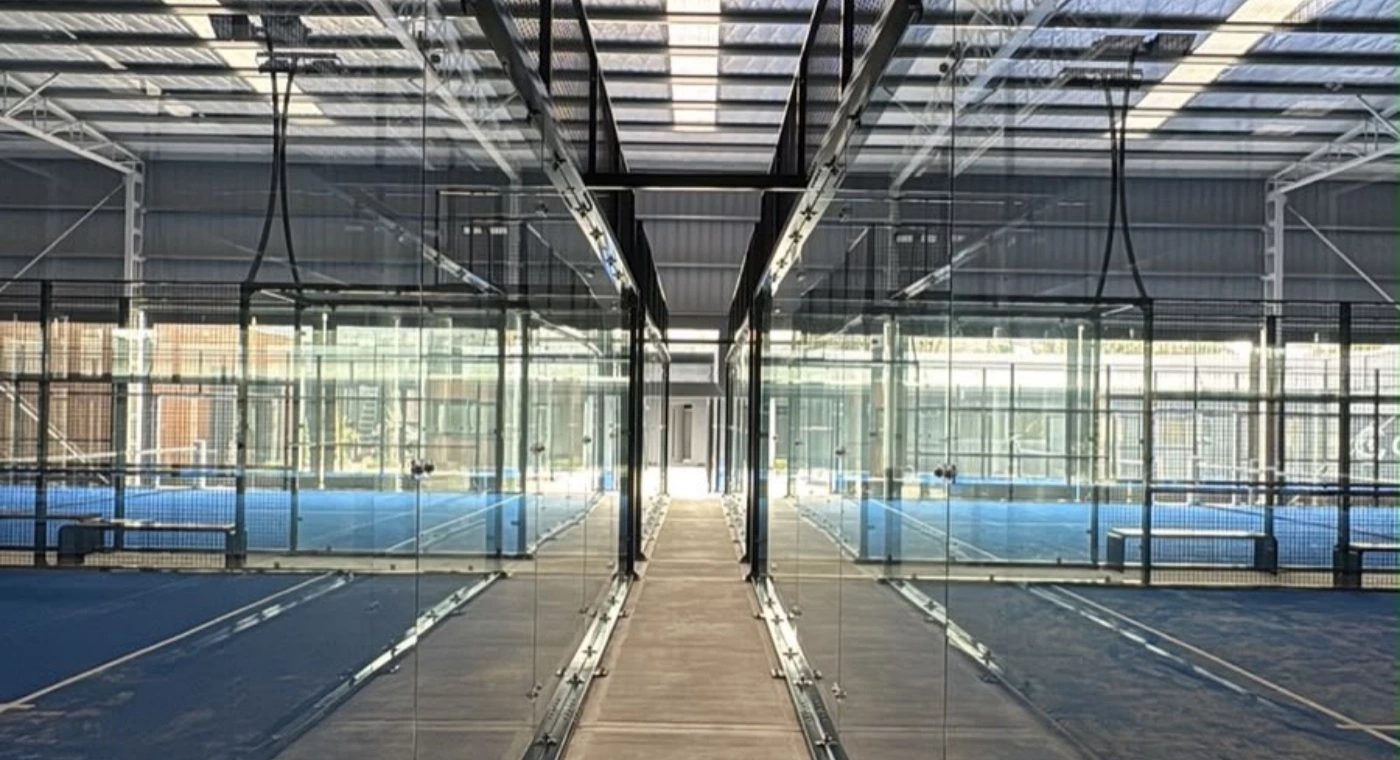
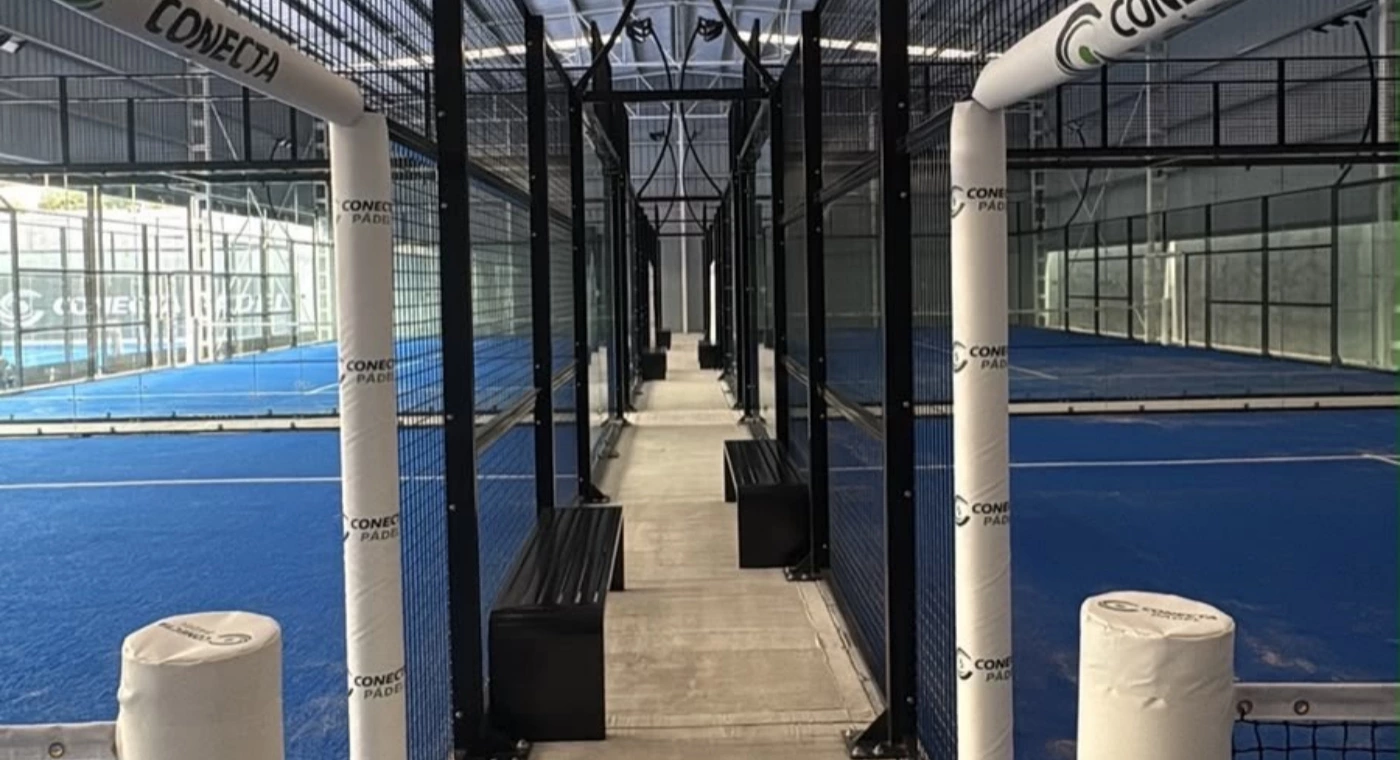
The indoor section is covered by a wide-span steel-frame structure with translucent roof panels. This keeps the space bright during the day without relying entirely on artificial lighting — an important quality-of-life detail for a venue that likely runs morning sessions through to late evening. The four indoor courts are arranged side by side, connected by a shared central corridor that runs the full length of the facility. This corridor serves as both a player access route and an informal spectator walkway, with benches positioned along each side between the courts.
Getting this layout right matters more than it might seem. The corridor width, the net clearance height between courts, and the overall spacing all affect how comfortable the facility feels during peak hours when multiple courts are in use simultaneously. From the photos, these dimensions look well-considered — the corridor is wide enough for two people to pass comfortably, and the ceiling height under the canopy gives the space an open, unenclosed feel.
The Blue Courts: A Decision with More Behind It Than Aesthetics
Every court at Conecta Padel uses blue artificial turf paired with a matte black steel frame. This isn't a default choice — it's a configuration that serves several practical purposes.
On-court visibility. Blue turf provides higher contrast against white court lines than green does. For players, this means cleaner reads on ball position relative to the baseline and sideline — something that matters more as your level improves. For beginners, it reduces one small source of visual confusion during fast exchanges. It's a subtle ergonomic advantage, but it's real.
Brand alignment. Looking at the site photos, Conecta Padel's visual identity is built on a dark background with clean white typography — the "CONECTA PÁDEL" lettering on the back walls and the branded column padding on the court posts both follow this logic. Blue courts are a natural complement to that palette. The colour combination photographs well, holds up in video, and gives the club a consistent visual signature across both its physical space and social media content. For a club that's building a local following, that kind of brand coherence has real value.
Outdoor durability. The single outdoor court also uses blue turf, which raises the quality bar slightly compared to indoor applications. Blue pigmentation in artificial turf tends to show UV fading more visibly than green, which means the underlying material needs to be properly UV-stabilised to maintain its appearance over time. This is worth paying attention to when specifying courts for outdoor use in a climate like Buenos Aires, where summer temperatures and sun exposure are significant.
The 4+1 Configuration: Why This Split Makes Sense
The choice to build four indoor courts and one outdoor court isn't arbitrary. It reflects a specific operating logic that's worth unpacking.
Indoor courts are the workhorse of any club's booking schedule. They run regardless of weather, handle the high-frequency time slots — weekday evenings, weekend mornings — and support structured programmes like member leagues and coaching sessions. Four indoor courts give Conecta Padel enough capacity to run multiple sessions simultaneously and maintain reasonable court availability during peak times without overloading any single booking window.
The outdoor court serves a different function. In good weather, it adds capacity. It can also work as a more casual or introductory space — easier to open up for walk-ins or free trial sessions without pulling revenue-generating indoor courts off the schedule. For a club that's actively building its member base, that kind of flexible entry point has practical value.
From an investment perspective, this configuration also makes sense. Indoor courts carry higher build costs than outdoor ones. Leading with a strong indoor facility and adding one outdoor court keeps the initial capital commitment in check while still delivering a complete, professional club. It also leaves room to grow — if demand justifies it, the outdoor space can eventually be enclosed or additional courts can be added to the indoor section.
UNIPADEL's Role: What the Project Actually Required
A five-court project with both indoor and outdoor components involves more coordination than a single-court install, and the specifics matter.
The Panoramic Court format was the right choice for the indoor section in particular. The large glass panels on the back and side walls reduce the enclosed feeling that solid-wall courts can create — important in a covered space where natural ventilation is limited. They also mean the corridor spectators can see clearly into each court without obstructions, creating a connected, active atmosphere when multiple courts are running at once.
For the outdoor court, the structural requirements are different. Ground anchor depth, drainage design, and the anti-corrosion specification for the steel frame all need to account for outdoor exposure in a way that purely indoor courts don't. These details are handled differently at the manufacturing stage, which is why indoor and outdoor courts within the same project need to be specified and produced with that distinction in mind.
Beyond the hardware, UNIPADEL's involvement in this project included:
- Colour and brand coordination: Aligning the blue turf and black frame specification with Conecta Padel's visual identity from the proposal stage
- Multi-court corridor planning: Advising on spacing, net heights, and walkway dimensions to ensure the indoor layout worked as a cohesive facility
- Export and delivery management: Coordinating production, container loading, export documentation, and delivery to Argentina on a schedule aligned with the construction timeline
- Installation guidance: Providing technical drawings and remote support to help the local installation team build to the correct structural tolerances
The Takeaway
What makes Conecta Padel a useful reference case is that it's a complete project — not just a set of courts installed in a space. The colour choice works with the brand. The indoor-outdoor split reflects a considered operating model. The corridor layout actually functions as part of the club experience. And the outdoor court fits into its neighbourhood context in a way that feels natural rather than bolted on.
If you're planning a padel club in Argentina, South America, or elsewhere — single court or multi-court, indoor, outdoor, or both — UNIPADEL can provide a court configuration proposal and a clear delivery plan from our factory to your site.
Looking to build your own padel facility? Contact UNIPADEL for a customised solution and project consultation.