Español
 Franch
  русский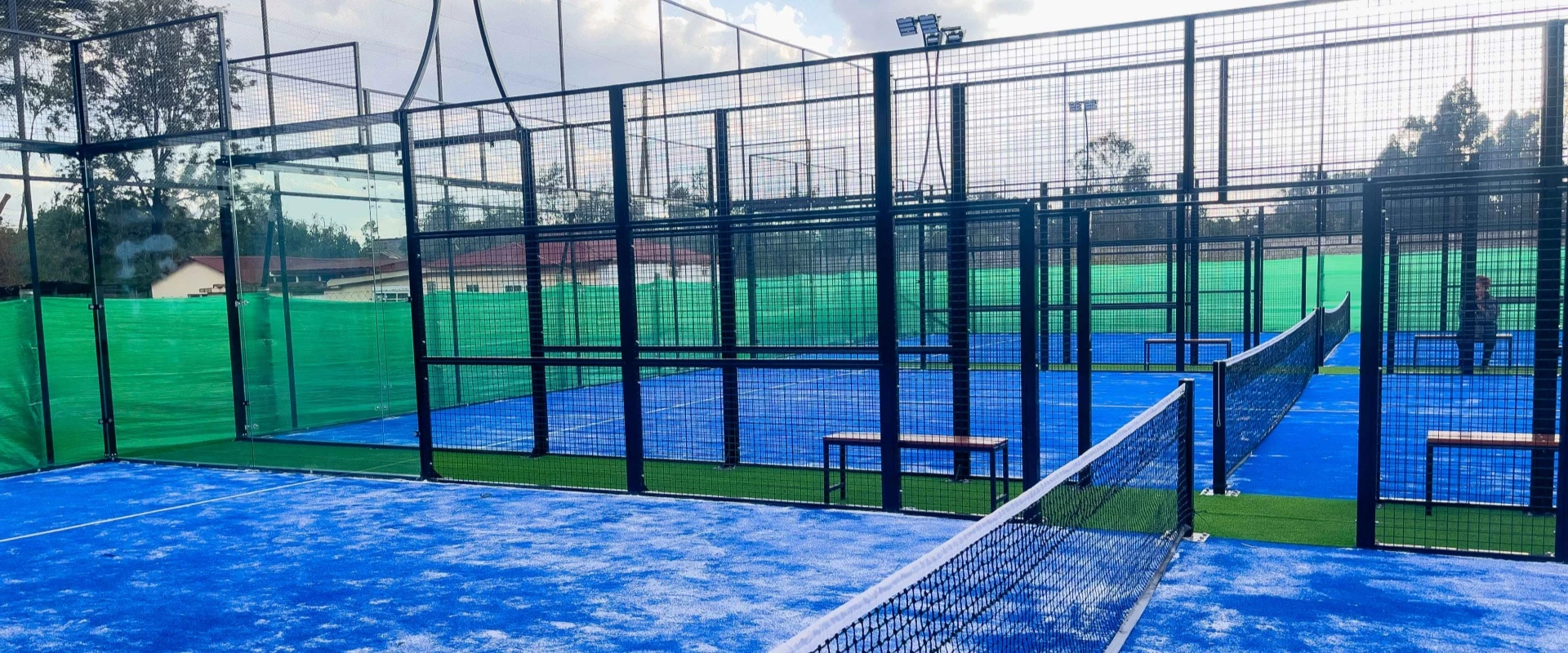
Building a Padel Court in Germany: Guide to Regulations, Costs & Permits
Germany's Padel Boom: Construction Regulations & Market Opportunities in 2026
Germany has moved decisively from padel observer to padel investor. With over 1,255 courts operational nationwide and the market projected to surpass 2,000 courts by 2026, the padel court Germany sector has entered its most consequential growth phase. For club operators, sports property developers, and tennis club boards considering conversion projects, the fundamental question has shifted: not whether to build, but how to navigate Germany's rigorous regulatory environment to build correctly.
The German market carries a structural advantage that no other major European padel market replicates at scale: over 4.5 million active tennis players providing a natural, high-conversion audience for the sport. Yet Germany's padel penetration rate remains well below Spain, Italy, Sweden, and even the UK — creating a supply-demand gap that represents one of the most compelling infrastructure investment opportunities in European sport today.
This guide provides a complete, regulation-accurate overview of padel court construction Germany — from planning permission requirements and technical standards to investment costs in EUR and market opportunity analysis for 2026.
The Development of the Padel Market in Germany
Germany boasts over 4.5 million active tennis players, forming a natural source of conversion for the padel movement, and this conversion is happening rapidly.
| Indicators | 2021 | 2024 | 2026 Forecast |
| Number of Stadiums | 250 | 1,200 | 2,000+ |
| Number of Venues | 80 | 450+ | 700+ |
| Active Players | 20,000 | 180,000 | 300,000+ |
| Average annual growth rate | - | - | 15.9% |
In Europe, the German market is unique in that it possesses enormous untapped potential. Germany boasts the largest sports club network in Europe, yet its Padel penetration rate is far lower than in Spain, Italy, and even the UK. This supply-demand gap represents an investment opportunity.
Does Padel Court Germany Building Permit Apply? The Legal Reality
The most common and most consequential planning misconception in the German padel market is that small sports structures can avoid formal planning approval. For padel courts, this assumption is almost always wrong.
Under German building law (Bauordnungsrecht), padel courts are legally classified as permanent structures (bauliche Anlagen) due to their reinforced concrete foundations, structural steel frames standing 3–4 metres high, and load-bearing tempered glass enclosures. This classification triggers a mandatory Baugenehmigung requirement in virtually all German federal states.
The Formal Baugenehmigung Process
A complete Baugenehmigung padel court Germany application must be submitted to the local building authority (Bauordnungsamt) before any excavation or construction begins. The standard application package includes:
1. Land Use Planning Check (Bebauungsplan) The site must be designated for sports, commercial, or mixed-use purposes in the local development plan. Agricultural land, pure residential zones, and many Green Belt designations cannot accommodate padel courts without prior land use reclassification.
2. Structural Engineering Drawings (Statikbericht) All structural calculations must be prepared and signed by a state-certified structural engineer (Statiker) licensed to practice in the relevant German federal state. Generic supplier structural documents are not accepted — the calculations must reference the specific wind load zone (see Section 3) and soil conditions of the proposed site.
3. Noise Impact Assessment (Lärmschutzgutachten) For any outdoor court adjacent to or within reasonable proximity of residential receptors, a formal acoustic impact report is required. This assessment must apply the methodology of the 18. BImSchV (Sportanlagenlärmschutzverordnung — Sports Facility Noise Protection Ordinance) — the primary noise regulation governing padel in Germany.
4. Utilities and Drainage Plan Electrical connection schematics, LED lighting pole siting, surface drainage routing, and vehicle access plans must be submitted as part of the application.
Permitted Development Exceptions: Some German states allow small sports structures to proceed without full Baugenehmigung under verfahrensfreie Bauvorhaben (permitted development) provisions. However, the combination of 3–4 metre glass walls and permanent lighting installations almost invariably exceeds the scope of these exemptions, regardless of state. Do not assume exemption without written pre-application advice from the local Bauordnungsamt.
Typical approval timeline: 3–6 months. Factor this into project programme planning from day one — specifically when coordinating with court manufacturers on production lead times and delivery windows.
Core Technical Standards for Padel Court Installation in Germany
Supporting suppliers must provide certification documents conforming to the following standards:
Structure and Wind Load — DIN EN 1991-1-4:2010-12 (European Standard 1)
Germany classifies wind load zones into four zones (Zones 1 to 4, increasing from inland plains to the North Sea coast). Steel frame structures must be hot-dip galvanized, and structural calculations must be performed based on the specific wind zone of the project location. A structural calculation report (Statikbericht) from the supplier must be obtained during procurement.
Glass Safety — DIN EN 12150-1
Padel court enclosure glass must use ESG (single-pane safety glass/tempered glass), with a standard thickness of 10mm or 12mm, and complete certification documents must be provided for review by the building authority.
Sports Lighting — DIN EN 12193
- Lighting Class C, 200 lux, suitable for leisure/school events
- Lighting Class B, 300 lux, suitable for club/regional events
- Lighting Class A, 500–750 lux, suitable for national/professional events
The Düsseldorf Premier Padel P2 (2025/2026) and other DFB/DTB-affiliated tournaments require minimum Class A illumination. For standard commercial clubs, Class B (300 lux) is the correct design target. All lighting must be LED — no alternative is compatible with German energy efficiency requirements under the applicable building regulations.
Foundation Engineering — DIN 1045 / DIN EN 1992
Foundation design must be based on a site-specific geotechnical survey (Bodengutachten):
- Reinforced concrete ring beam: Minimum C35/C40 grade, 400–600mm wide, 500–800mm deep (deeper on shrink-swell clay soils, common in Southern and Eastern Germany)
- Slab reinforcement: A252 or A393 welded steel mesh
- Surface flatness: ±3mm under any 3-metre straightedge — mandatory for predictable ball bounce and to prevent glass panel stress from frame distortion
- Drainage: Germany's surface sealing regulations (Flächenversiegelung) increasingly require permeable sub-base systems or SuDS-compatible drainage asphalt for outdoor courts
Noise Compliance (18. BImSchV)
Noise is the single most common cause of Baugenehmigung refusal and post-construction enforcement action for padel courts in Germany. The 18. BImSchV (Sportanlagenlärmschutzverordnung) sets legally binding immission limits at the nearest residential receptor.
| Zone | Daytime (06:00–22:00) | Rest Periods* | Night-time (22:00–06:00) |
|---|---|---|---|
| Industrial (Gewerbegebiet) | 65 dB(A) | 60 dB(A) | 50 dB(A) |
| Mixed Use (Mischgebiet) | 60 dB(A) | 55 dB(A) | 45 dB(A) |
| Residential (Wohngebiet) | 50–55 dB(A) | 45–50 dB(A) | 35–40 dB(A) |
Padel's characteristic acoustic signature — the racket-on-ball "pop" and ball-on-glass impact — typically generates 55–70 dB(A) at court level. In residential zones, this almost always requires engineered noise mitigation to achieve compliance.
Practical Solutions
- Soundproof Enclosures — Reduces sound propagation by 8 to 12 dB
- Glass Vibration-Impact Installation — Rubber gaskets isolate structural vibration transmission
- Operating Hour Control — Prohibits matches during legally mandated quiet periods
- Optimized Site Selection and Layout — Maximizes the distance between the stadium and the grounds, utilizing green belts as natural buffers
Padel Court Germany Cost EUR — Realistic Investment Breakdown
The most significant data quality issue with generic padel content is inaccurate cost information. The following reflects current German market rates (2025–2026).
| Cost Component | Market Range (EUR) |
|---|---|
| Court kit — steel frame, 12mm glass, PE turf, LED lighting | €20,000 – €32,000 |
| Foundation and groundworks (ring beam, drainage, slab) | €30,000 – €60,000 |
| Planning, acoustic survey, Statikbericht, permits | €5,000 – €12,000 |
| Electrical connection and site infrastructure | €8,000 – €20,000 |
| Total per outdoor court (turnkey, standard site) | €63,000 – €124,000 |
| Indoor warehouse conversion per court | €40,000 – €75,000 |
Note on court kit pricing: Factory-direct pricing from certified Chinese manufacturers (CIF Hamburg or Frankfurt) typically ranges €20,000–€32,000 per panoramic court. This is significantly lower than the €35,000–€55,000 typically quoted by European intermediaries. The groundworks and planning costs are identical regardless of court origin — making factory-direct sourcing the primary lever for improving project ROI.
Revenue Potential and ROI Model
- Venue Rental Rates: Standard hours €28–€36/hour; peak hours in Berlin/Munich up to €40+/hour
- Club Coaches and Courses: 1-on-1 coaching available; course sales available
- Club Amenities: Container shops selling padel pitches, balls, and catering
- Average Saleable Hours: 6–8 hours daily
Investment recovery period: Well-operated commercial venues typically take 18 to 36 months.
Available Subsidies and Funding
Padel court Germany investment ROI is materially improved by three established funding mechanisms:
- Landessportbund Subsidy: 20%–30% of sports club infrastructure construction costs
- EU LEADER Scheme: Rural sports facility development funding for eligible regions
- KfW Loan Scheme: Preferential financing options for energy-efficient sports facilities
These subsidies can significantly improve project returns, enabling small and medium-sized clubs with limited funds to successfully advance stadium construction.
The Tennis Club Conversion Model — Germany's Fastest ROI Pathway
Converting existing tennis infrastructure to accommodate padel is the highest-ROI entry strategy available in the German market. One standard tennis court footprint (23.77m × 10.97m) can accommodate one padel court with compliant runoff margins — or, with modest perimeter adjustment, two padel courts in a side-by-side configuration.
The validated German conversion model:
- Tennis club adds 2–4 padel courts using available or underutilised land within the existing facility
- Pay-per-play app-based booking (Playtomic or equivalent) generates revenue from day one — no membership restructuring required
- Padel court revenue supplements declining tennis membership dues, improving overall club financial sustainability
- New demographic (25–45 age group, corporate wellness clients) expands partnership and F&B revenue potential
Operators including Padel City (Munich, Dortmund) and Padel Base (Werne) have validated this model at scale, demonstrating that courts paired with quality coaching and social F&B generate consistent 25–30 month payback periods in the German regional market.
Clubs that have completed this conversion report membership increases of 15–25% within the first year, driven primarily by players who find padel more accessible and social than traditional tennis.
Why is 2026 a critical window of opportunity?
Germany is currently in what industry analysts describe as the "supply gap phase" — player demand consistently outpacing available court capacity in virtually every major city. This gap is most acute right now.
By 2027–2028, the consolidation phase will begin. Early operators will have established:
- Brand recognition within local padel communities
- Prime court locations under long-term lease
- Preferred supplier relationships with document-certified manufacturers
- DTB and LSB partnership status (which carries planning and funding advantages)
These advantages compound over time. The regulatory complexity that discourages some investors is, for those who understand it, a competitive moat — it raises the barrier to entry and protects the unit economics of established operators against late-entering competition.
How does UNIPADEL support project implementation in the German market?
UNIPADEL has supplied certified Padel stadiums to numerous projects across Europe, with products and documentation fully compliant with local wind load, glass safety, and lighting standards. Our project support services include:
- Structural calculation reports (Statikbericht) – directly applicable to building permit applications
- DIN EN 12150-1 certified glass technical documentation
- DIN EN 1991-1-4 wind load compliance – calculated according to specific German wind zones
- DIN EN 12193 Class B/C lighting system specifications
- Project timeline support, fully considering German approval cycles
Whether it's a tennis club renovation, a standalone Padel center development, or a hotel/resort-affiliated stadium project, UNIPADEL provides technical documentation and product quality recognized by German building authorities.
Wichtige Fragen zum Padel-Markt in Deutschland (FAQs)
Q1: Was kostet der Bau eines Padel-Platzes in Deutschland (2026)?
A turnkey outdoor padel court project in Germany typically ranges from €63,000 to €124,000. This includes the court kit (€20,000–€32,000), foundation/groundworks (€30,000–€60,000), and planning/permits. Sourcing factory-direct from UNIPADEL allows you to save significantly on the equipment cost without compromising on German quality standards.
Q2: Benötige ich für einen Padel-Platz in Deutschland eine Baugenehmigung?
Yes. In almost all German federal states, a padel court is classified as a "bauliche Anlage" (permanent structure) due to its concrete foundation and 4-meter high steel/glass structure. You must submit a formal Baugenehmigung application including a noise assessment (Lärmschutzgutachten) and structural report (Statikbericht).
Q3: Welche Lärmschutzregeln (18. BImSchV) gelten für Padel-Anlagen?
Padel noise is governed by the 18. BImSchV (Sportanlagenlärmschutzverordnung). In mixed-use areas (Mischgebiete), the limit is 60 dB(A) during the day. UNIPADEL supports compliance by providing specific glass vibration-impact gaskets and technical data to assist acoustic consultants in their reports.
Q4: Stellt UNIPADEL einen prüffähigen Statikbericht für deutsche Windlastzonen zur Verfügung?
Yes. We provide structural calculation reports (Statikbericht) that comply with DIN EN 1991-1-4:2010-12. Our calculations cover German Wind Zones 1 to 4, ensuring your court is safe and compliant whether it is built in the inland plains or the North Sea coastal regions.
Q5: Wie hoch ist der ROI (Return on Investment) für Padel-Clubs in Deutschland?
With hourly rates between €28 and €40 and the high conversion rate of Germany's 4.5 million tennis players, most commercial padel projects see a full ROI within 18 to 36 months. Converting underutilized tennis courts into padel courts is currently the fastest pathway to profitability in the German market.