Español
 Franch
  русский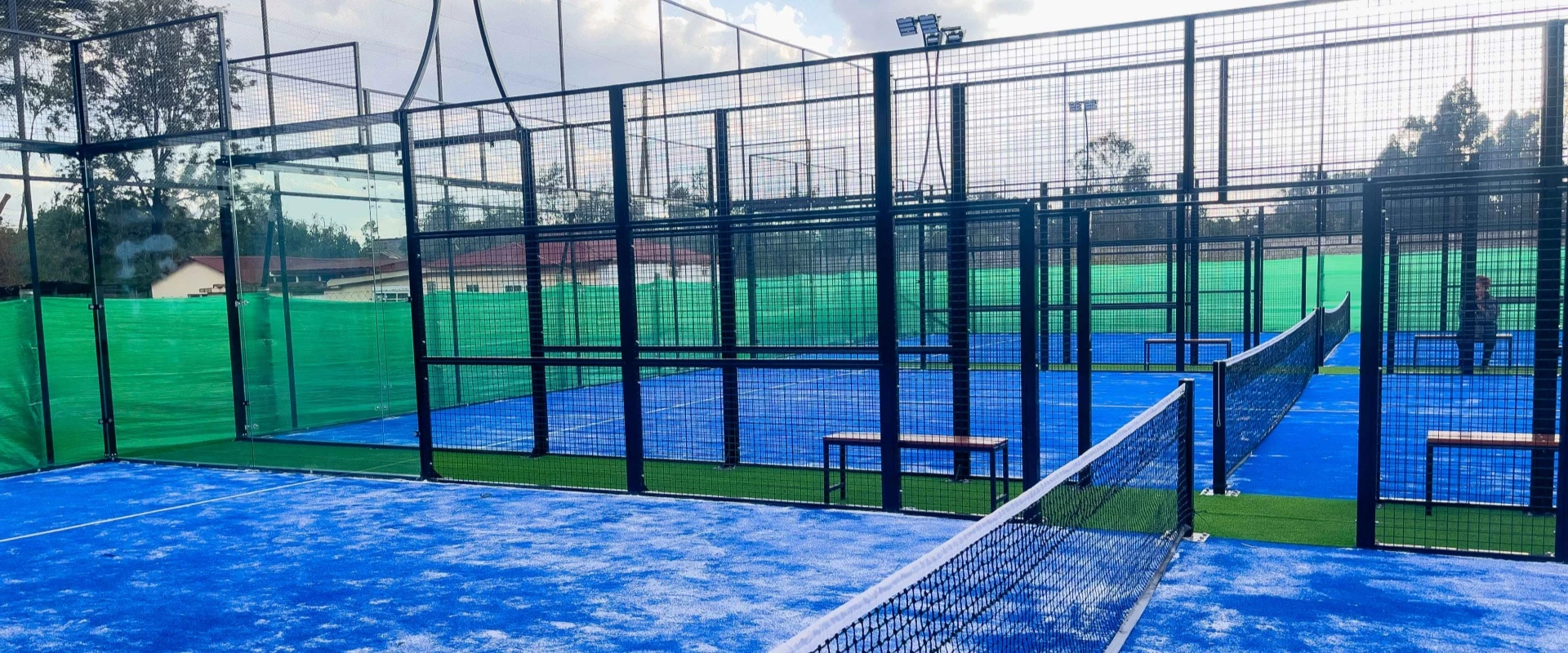
Key Compliance Points for Padel Court Construction in the UK
With the rapid growth of Padel in the UK, more and more investors, club operators, and property developers are focusing on this high-growth sport. Whether building new professional Padel clubs or converting old warehouses, commercial spaces, or school grounds into Padel venues, "whether it can be built" and "how to build it compliantly" are always the first hurdles to project success.
As a long-term Padel court manufacturing and solutions provider serving the UK and European markets, UNIPADEL has found in numerous projects that:What truly determines the success or failure of a project is often not the court itself, but the initial planning, property rights, and legal compliance assessments.
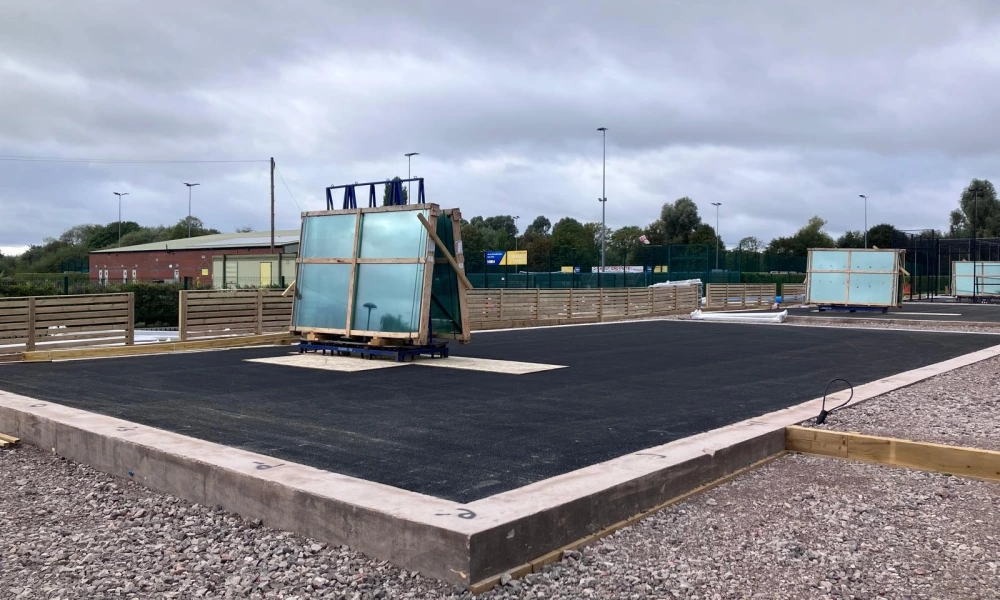
1. Planning Permission: The First Step to a "Legally Existing" Padel Court
In the UK, a Padel court is not simply a matter of "placing sports facilities," but usually involves permanent building structures, such as:
- Steel structure court frames
- Glass enclosures and fencing systems
- Roofing (Indoor/Covered Court)
- Floodlighting system
- Foundation and drainage structures
In most cases, the above works require planning permission.
The planning use classifications for different types of Padel courts, according to the current UK planning system, are commonly classified as:
- Outdoor Padel Court: Usually classified as F2(c) (Outdoor sports and leisure use)
- Indoor Padel Court: Usually classified as E(d) (Indoor sports and leisure use)
If the existing building itself already has E-class use, in some cases it can be directly converted into an indoor Padel venue without reapplying for a change of use.
However, whether "no application is truly needed" must be considered in conjunction with:
- Historical planning approvals
- Scale of renovation and construction content
- Whether new lighting, noise, or pedestrian traffic will be added
UNIPADEL's Recommendation: Before confirming the equipment plan, prioritize engaging a planning consultant for a feasibility assessment.In the early stages of the project, we will cooperate with clients to provide court structure, dimensions, lighting, and noise parameter documents to help planning consultants complete the application or risk assessment more efficiently.
The UNIPADEL Modular Foundation | Portable Base takes a fundamentally different approach.
The system is an interlocking steel platform that suspends the court above the existing surface — grass, compacted gravel, sand, or any reasonably level terrain — with no ground excavation and no concrete poured into the earth. Because no permanent structural connection is made to the land, the installation is classified as a temporary or demountable structure in most UK planning contexts.
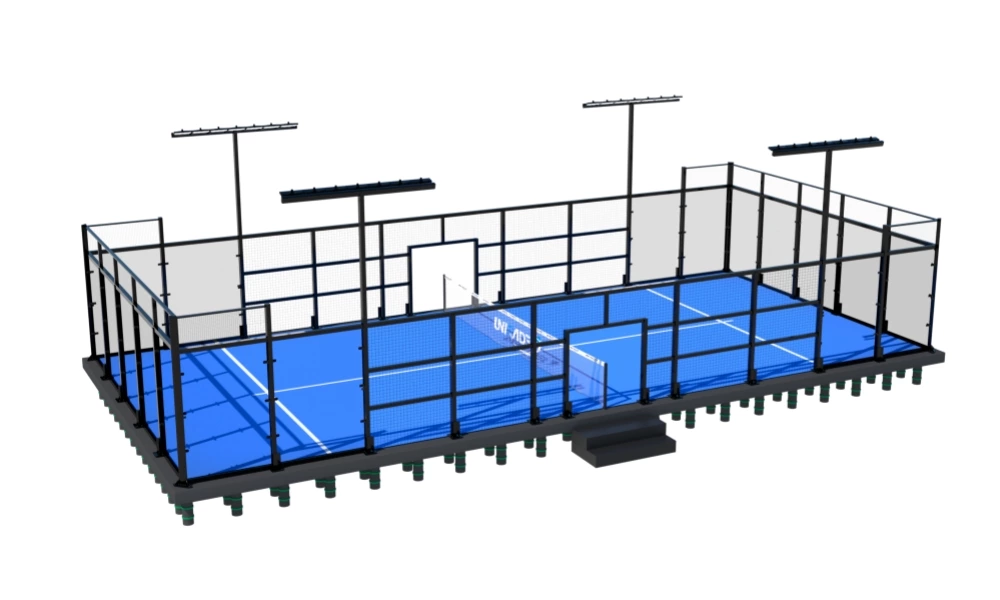
What this means in practice for UK planning:
| Planning Factor | Traditional Fixed Court | UNIPADEL Modular Foundation |
|---|---|---|
| Foundation type | C25 concrete slab, excavated | Steel platform, surface-mounted |
| Ground disturbance | Yes — excavation required | None — zero ground damage |
| Planning classification | Engineering operation | Temporary/demountable structure |
| Typical approval pathway | Full planning application (8–16 weeks) | Potential LDC route on qualifying sites |
| Noise + lighting studies | Usually required | Scope may be reduced |
| Reinstatement obligation | Concrete removal at lease end | Fully demountable, no remediation |
Specific UK contexts where the Modular Foundation simplifies compliance:
- School and education sites — Section 5 of this article discusses why school projects often avoid traditional leases entirely. The same logic applies to planning: a demountable structure avoids the "material change of use" and "engineering operation" triggers that complicate school planning applications, and in many cases does not require approval from the Secretary of State for Education.
- Leased commercial and retail sites — Where the superior landlord's consent clause prohibits structural modifications to the land, the Modular Foundation's zero-ground-damage installation satisfies this condition without negotiation. Courts can be installed and removed without triggering restoration obligations that apply to concrete foundations.
- Conservation areas and heritage zones — Ground excavation in conservation areas requires additional consent under Section 196D of the Town and Country Planning Act. A surface-mounted system eliminates this trigger entirely.
- Green Belt and protected landscapes — Temporary structures are assessed differently from permanent engineering operations under Green Belt policy. The Modular Foundation's demountable classification provides a materially stronger case for approval in sensitive locations.
Supporting documentation for your planning application:
UNIPADEL provides full CE construction materials certification (EU 305/2011 / EN 14566:2008+A1:2009) and EU RoHS compliance documentation (2011/65/EU, EU 2015/863) as standard with all Modular Foundation orders. These documents are accepted by UK planning authorities and provide the technical evidence base your planning consultant needs to support a temporary structure classification argument.
2. Property Title Due Diligence: Many Projects Get Stuck on "Whether the Land Can Be Used"
Whether it's new land development or existing property renovation, property title due diligence is an indispensable step. Common risks include:
- Restrictive covenants
- Prohibition of noise generation
- Prohibition of causing disturbance to surrounding property owners
- Prohibition of specific commercial uses
These clauses are particularly significant for outdoor Padel courts and may even directly negate the project's feasibility.
Additional considerations for leased land:
If the project site is leased, further verification is required regarding:
- Whether the lessor is a sub-landlord
- Whether the main lease permits subletting
- Whether structural modifications are permitted
- Whether written consent from the superior landlord (Freeholder) is required
UNIPADEL has found in several UK projects that failure to verify main lease restrictions in advance is one of the most common reasons for project delays.
3. Agreement for Lease: "Insuring" the Project
Signing a formal lease agreement before planning permission is fully secured carries extremely high risks.
Therefore, an Agreement for Lease is a very practical tool in UK Padel projects.
This agreement typically stipulates that:
- The formal leasing stage will only commence after all of the following conditions are met:
- Obtaining planning permission
- Securing project financing or budget
- Obtaining approval from the superior landlord or a third party
UNIPADEL's Experience
Through this method, clients can secure the land in advance while avoiding excessive legal and financial risks during the uncertain stages.
4. Analysis of Core Clauses in Padel Venue Lease Agreements
A lease agreement "designed for Padel operations" must fully match the actual business model.
Rent Structure
Fixed rent or Turnover Rent
For newly built Padel venues, the turnover rent model is more beneficial for navigating the early development period.
Permitted Use
In UNIPADEL projects, many clients adopt a mixed-use model, including:
- Padel + Café
- Padel + Bar
- Padel + Pro Shop / Retail
Therefore, the lease agreement must explicitly permit these ancillary businesses, and not be limited to "sports use" only.
Assignment and Subletting Rights
Whether the café area and retail area can be operated by a third party
Whether coaches or brand partners can be authorized to use the venue
Fixtures and Removal Rights
Padel courts require significant investment, so tenants should ensure that:
The courts and ancillary facilities are considered tenant's fixtures
They have the right to remove and dispose of them upon lease expiry
A padel court built on a poured-concrete slab is — in strict legal terms — a fixture: it is attached to the land and, absent a specific lease clause to the contrary, reverts to the landlord at lease end. Tenants who have invested in a concrete-foundation court without an explicit removal clause have found, on lease expiry, that their landlord claims ownership of the structure.
The UNIPADEL Modular Foundation system changes this analysis. Because the court is bolted to a steel platform that sits on — but is not bonded to — the existing surface, the entire installation is unambiguously a tenant's chattel: it belongs to the operator, can be removed at any time, and leaves no permanent alteration to the land. This simplifies lease drafting considerably and removes a common point of dispute between padel operators and their landlords.
Practical benefit: At lease expiry, the Modular Foundation court can be fully disassembled and relocated to a new site. The capital invested in the court is not written off — it moves with the operator to the next project.
5. When to Choose a "Licence Agreement" Instead of a Traditional Lease?
When building Padel courts on school or public institution land, traditional leases often face complex and lengthy approval processes.
In this case, a site use licence agreement or franchise agreement is often more practical:
- It does not transfer legal ownership of the land
- The approval process is relatively simplified
- It usually does not require approval from the Secretary of State for Education
UNIPADEL has assisted clients in successfully implementing multiple community and school Padel projects under this model.
6. Construction Permits, Rent-Free Period, and Renovation Coordination
Simultaneously with signing the lease agreement, the following should be completed:
- Alteration License Agreement
- Clearly define the scope of work and technical standards
- Specify restoration obligations after the lease term ends
Since no revenue can be generated during the construction period, securing a reasonable rent-free period is an important strategy to reduce initial operating pressure.
7. Digital Operations: Booking Systems and Data Compliance are Crucial
Modern Padel venues highly depend on online booking systems and membership management systems.
Key compliance points include:
- Reviewing third-party platform service agreements
- Clearly defining data control and usage responsibilities
- Publishing a privacy policy
- Compliant use of CCTV surveillance systems
During the project delivery phase, UNIPADEL assists clients in considering court layout, monitoring, and entrance/exit planning in advance to reduce future compliance adjustment costs.
8. Coach Cooperation Agreements: Clear Boundaries, Long-Term Win-Win
Most Padel coaches in the UK operate as freelancers.
A clear coaching agreement should specify:
- Fee and revenue sharing model
- Court usage rules
- Responsibilities and insurance arrangements
- Brand and course promotion boundaries
This not only protects the operator but also helps establish a stable coaching ecosystem.
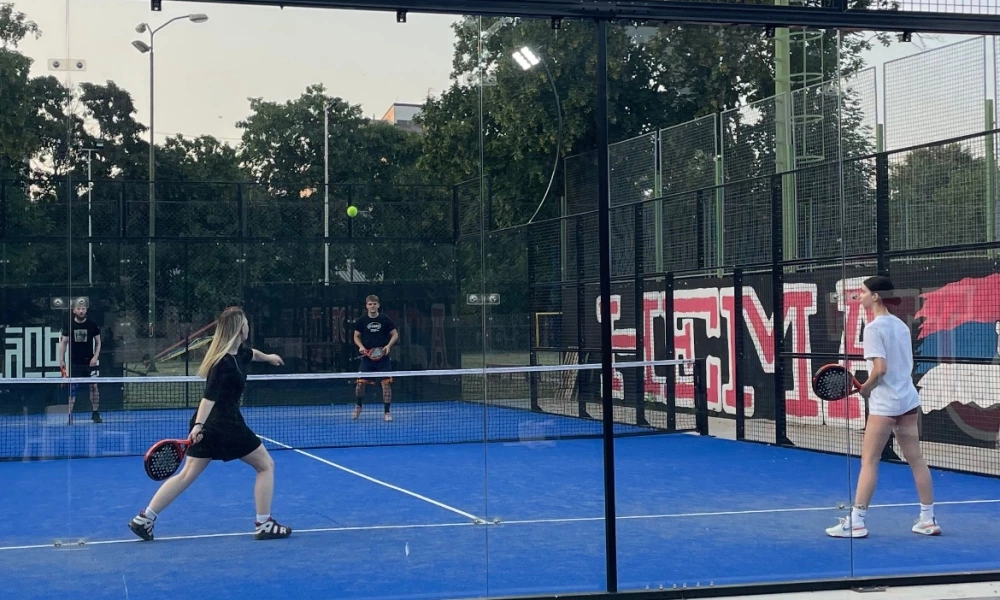
A Padel court is a long-term asset, not a short-term project
At UNIPADEL, we believe that Padel court construction is not simply the delivery of a single product, but rather the establishment of a long-term operational asset.Prioritizing planning, property rights, and contractual compliance from the initial stages of the project will not only prevent delays and additional costs but also lay a solid foundation for stable operation and future expansion.
For investors and operators where planning complexity, lease flexibility, or land reinstatement obligations are a concern, the UNIPADEL Modular Foundation | Portable Base is specifically designed to address the UK market's most common compliance hurdles — from demountable structure classification to tenant fixture status to zero-ground-damage lease compliance.
If you are planning a padel project in the UK, UNIPADEL is ready to provide you with one-stop support from a technical, compliance, and implementation perspective — including full CE and RoHS documentation packages, structural drawings for planning applications, and court configurations tailored to your site's planning classification.